Skip to content
Water is the most destructive force in residential and commercial construction. It is patient, persistent, and permeating. In ‘wet areas’ such as bathrooms, commercial kitchens, steam rooms, and swimming pools, the choice of wall substrate makes the difference between a structure that lasts 50 years and one that rots in five. For decades, builders gambled with ‘water-resistant’ drywall (Greenboard) or plywood, often with catastrophic results.
The failure mechanism is almost always the same: grout lines crack, moisture wicks behind the tile, and the organic substrate begins to feed mold and lose structural integrity. The tile doesn’t fall off because the glue failed; it falls off because the wall behind it dissolved.
This guide presents the engineering case for TSM waterproof cement board. We will move beyond marketing claims to analyze the biology of mold, the physics of hydrophobicity, and the correct installation protocols for high-risk wet zones.
The Biology of Failure: Why Greenboard Rots
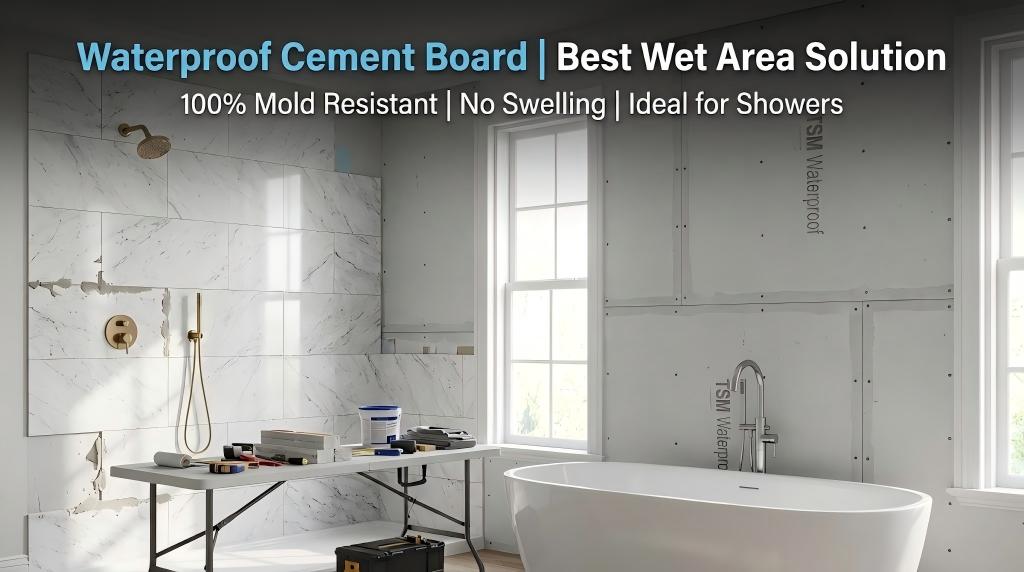
To understand the solution, we must analyze the problem. ‘Greenboard’ is simply standard gypsum board with a wax-treated paper face. While it repels splashing water, it cannot handle saturation.
The Mold Mechanism (Stachybotrys chartarum)
Mold requires three things to grow: moisture, oxygen, and food. Paper-faced drywall provides the food (cellulose). When steam penetrates the grout, it dampens the paper. In the dark, warm cavity of a wall, toxic black mold begins to colonize within 48 hours. This not only destroys the wall but leads to ‘Sick Building Syndrome,’ causing respiratory issues for occupants.
The Inorganic Solution
TSM mold resistant board changes the equation by removing the food source. It is composed of Portland cement, silica sand, and cellulose fibers that have been mineralized in an autoclave. The pH level is high (alkaline), which acts as a natural biocide. Mold spores simply cannot colonize the surface. For hospitals and hotels, this biological immunity is an asset protection strategy.
Wet Area Physics: Stability Under Saturation

Many materials swell when wet. Wood fibers expand, pushing tiles outward. Gypsum softens, losing its grip on screws. This movement is the primary cause of cracked grout lines, which then let in even more water—a vicious cycle.
TSM water resistant cement board is dimensionally stable. Our testing data shows that even after 24 hours of total submersion in water, the swelling rate is less than 0.1%. This rigidity is crucial for preserving the integrity of the waterproofing membrane applied over it. If the board doesn’t move, the membrane doesn’t tear.
Critical Applications: Beyond the Shower
While residential showers are the most common use case, TSM boards are engineered for far more hostile environments.
1. Indoor Swimming Pools
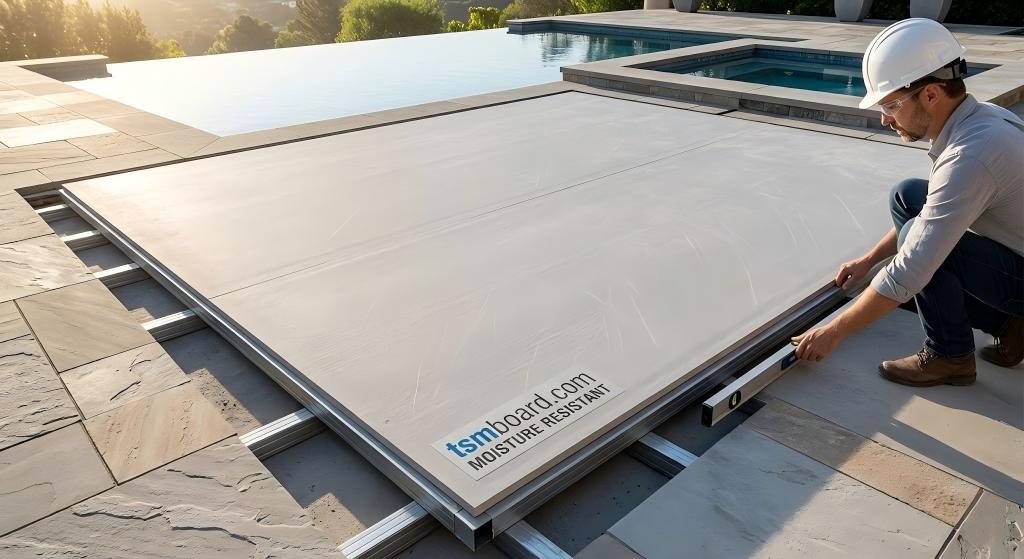
Pool halls are corrosive environments due to chloramines in the air. Steel rusts, and gypsum crumbles. TSM boards are used as swimming pool ceiling board solutions because they are immune to chlorine degradation and humidity saturation.
2. Steam Rooms & Saunas
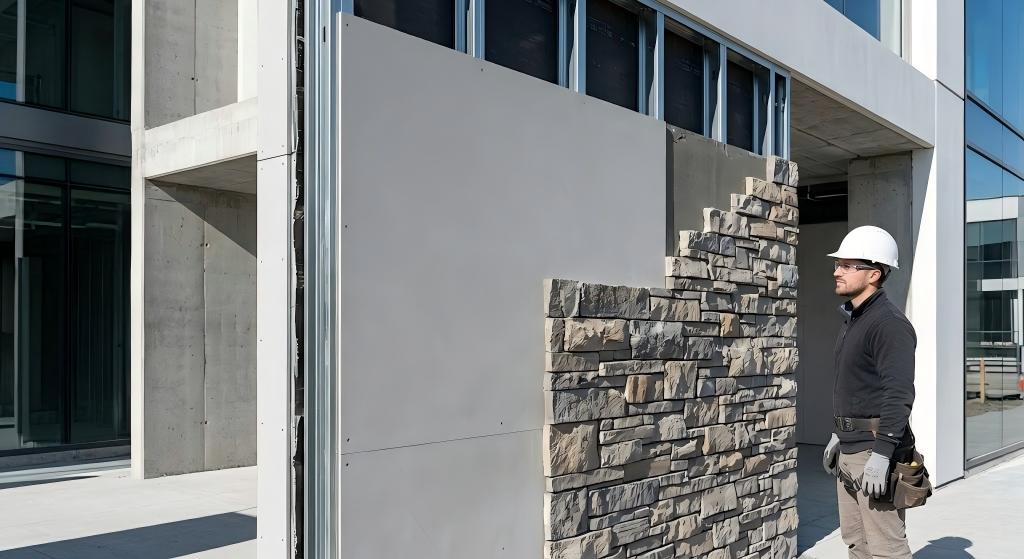
Steam exerts vapor pressure that drives moisture deep into walls. TSM High-Density board acts as a thermal mass that holds heat while resisting vapor drive, providing a solid backing for heavy stone cladding.
3. Commercial Kitchens
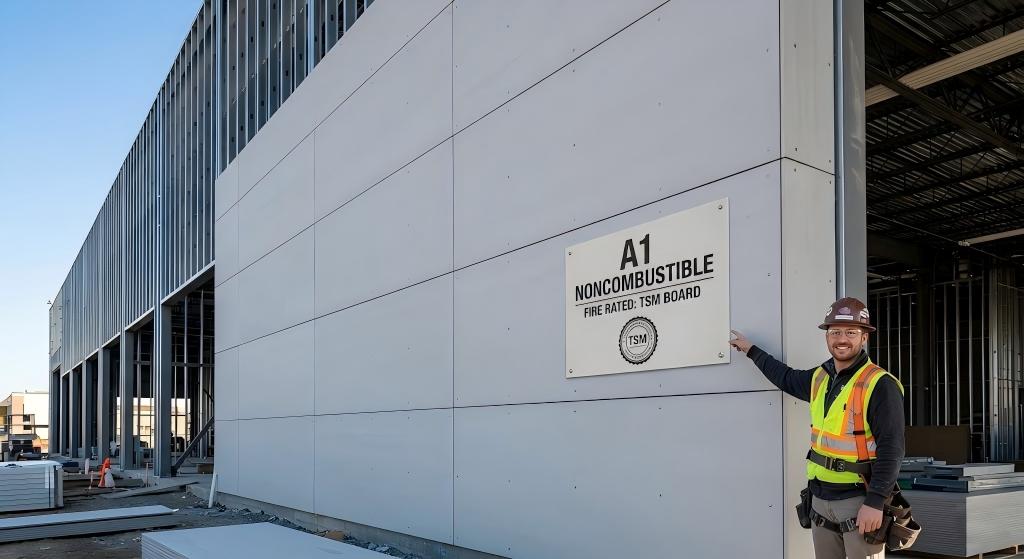
Behind stainless steel splashbacks, you need a board that is fireproof and waterproof. TSM board meets both criteria, ensuring that grease fires cannot penetrate the wall and daily power-washing does not rot the substrate.
Substrate Showdown: TSM vs. The Rest
| Material | Water Resistance | Mold Risk | Tile Adhesion |
| TSM Cement Board | High (Hydrophobic) | Zero (Inorganic) | Excellent (Textured) |
| Greenboard (Gypsum) | Low (Surface only) | High (Paper face) | Fair |
| Plywood | Poor (Swells/Rots) | High (Organic) | Poor (Delaminates) |
| Magnesium Oxide (MgO) | High | Low | Variable (Chloride risk) |
Installation SOP: The 5-Step Waterproof System
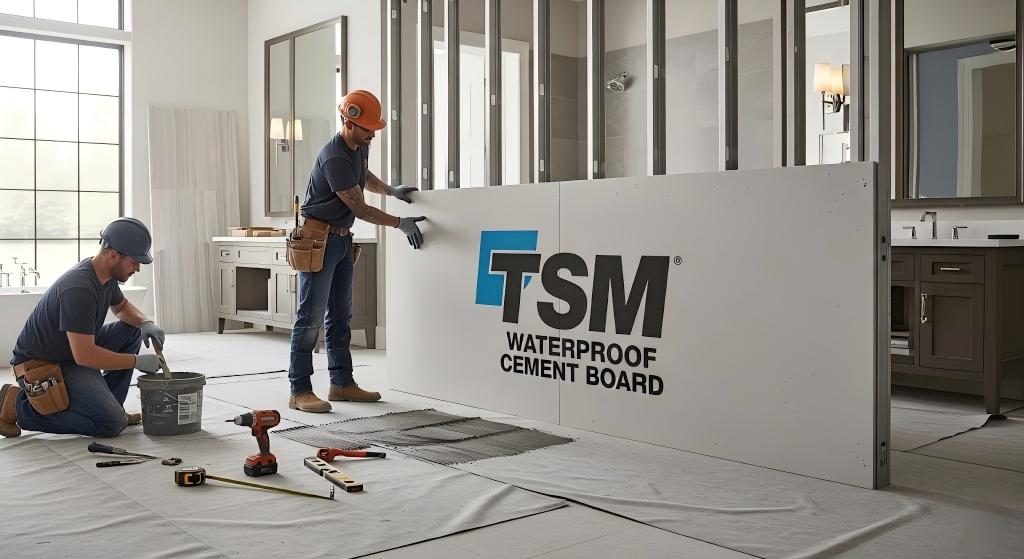
Using the right board is only step one. The installation method determines the success of the system. Here is the Standard Operating Procedure (SOP) for a leak-proof shower.
Step 1: Framing Prep
Ensure wall studs are plumb. Install a vapor barrier (like 4-mil polyethylene) BEHIND the cement board if required by local code, overlapping into the shower pan.
Step 2: Cutting & Fitting
Cut the cement backer board for shower leaving a 1/4 inch gap above the shower pan lip to prevent wicking. Leave a 1/8 inch gap between boards for expansion.
Step 3: Fastening
Use alkali-resistant screws (ceramic coated). Drive them flush with the surface every 8 inches. Do not overdrive, or you will crush the cement core and weaken the hold.
Step 4: Seaming (Critical)
Fill the gaps with thin-set mortar and embed alkali-resistant fiberglass mesh tape. Do NOT use standard drywall tape; it will rot. Smooth the mortar to create a monolithic surface.
Step 5: Liquid Membrane (Tanking)
For 100% security, roll on a liquid waterproofing membrane (like RedGard or Hydro Ban) over the entire TSM board surface. This creates a rubberized, water-tight skin before you even start tiling.
FAQ: Wet Area Specifications
Q: Do I need a vapor barrier behind TSM board?
A: TSM board is breathable, meaning it lets vapor pass through. If you use a surface liquid membrane (Step 5 above), you do NOT need a vapor barrier behind the studs, as this would create a ‘moisture sandwich’ that traps water. Follow the rule: only one vapor barrier per wall assembly.
Q: Can I use it as a floor underlayment?
A: Yes. It is the industry standard tile backer board for floors. Lay it in a bed of thin-set mortar and screw it down to the subfloor to create a rigid, uncoupling layer that prevents tile cracks.
Q: Which side faces out?
A: TSM boards typically have a smooth side and a textured side. For tiling, the rough/textured side should face out to provide a mechanical key for the mortar grip.
Conclusion: Build It Once, Build It Right
A bathroom renovation is expensive. The cost of the board behind the tile is negligible compared to the cost of ripping out a failed shower 3 years later.
By specifying TSM Waterproof Cement Board, you are building an insurance policy into the walls. You are preventing mold, stopping rot, and ensuring your stone or ceramic investment lasts a lifetime. Download our Wet Area Installation Guide for detailed diagrams.