Skip to content
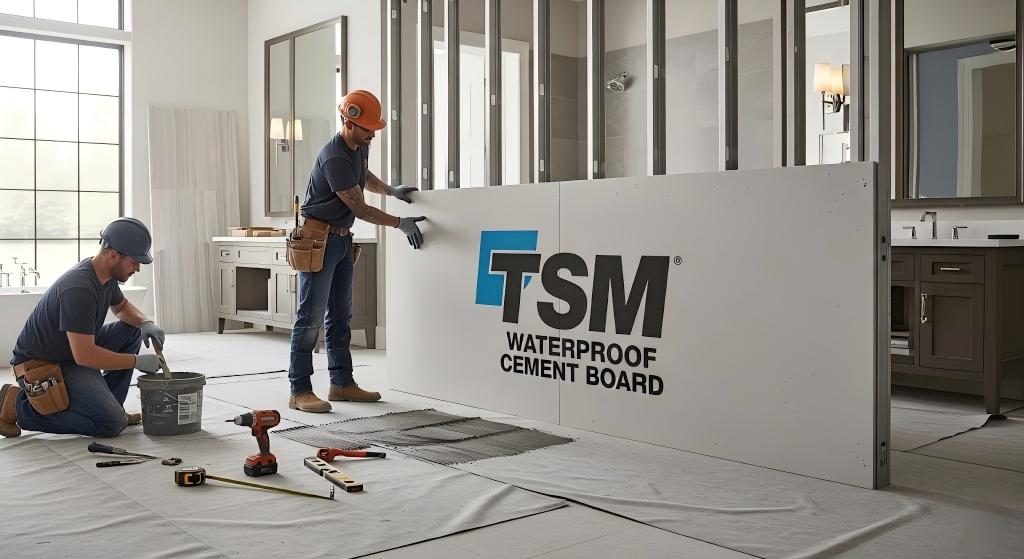
Introduction: The Hidden Physics of Water Damage
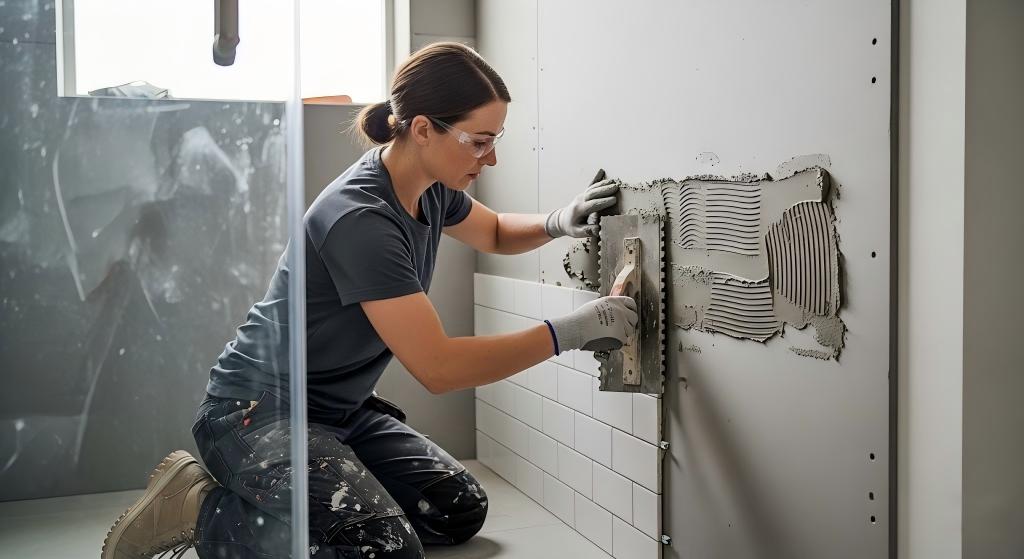
The architectural integrity of a building faces no greater internal threat than chronic moisture intrusion, making the specification of a true waterproof cement board a critical structural mandate. In both residential and commercial construction, the bathroom represents the highest-risk zone for catastrophic water damage. Historically, contractors utilized standard drywall or ‘green board’ (moisture-resistant gypsum) behind shower tiles. However, building science proves that tile grout and thin-set mortar are inherently porous materials. When water continuously strikes the shower wall, capillary action relentlessly pulls moisture through the grout lines and into the underlying substrate.
Once moisture breaches the tile barrier and reaches an organic substrate, severe structural degradation begins instantly. Gypsum cores swell and crumble, paper facings delaminate, and hidden wooden wall studs begin to rot. Worse still, the trapped moisture creates a perfect biological incubator for toxic black mold, posing severe health hazards and exposing contractors to massive liability claims.
Therefore, engineers and high-end tile setters universally reject organic backing materials in favor of inorganic, impermeable substrates. By utilizing advanced bathroom remodeling materials, builders permanently halt vapor drive and safeguard the structural envelope of the wet area. In this comprehensive technical guide, we will analyze the Portland cement matrix, explore strict installation protocols, and demonstrate exactly why engineered cement panels are the ultimate defense for modern high-humidity environments.
Core Physics & Material Advantages

To understand why premium cement panels flawlessly survive decades of hydrostatic pressure, we must examine the specific molecular physics and chemical composition of the substrate. A high-performance board must simultaneously resist water absorption and provide massive shear strength to support heavy stone tiles.
The Inorganic Portland Cement Matrix
Manufacturers formulate TSM cement board utilizing a highly compressed matrix of pure Portland cement, fine silica sand, and reinforcing alkali-resistant fiberglass mesh. Unlike traditional drywall, which relies on a pulverized gypsum core sandwiched between heavy kraft paper, premium cement boards contain absolute zero organic cellulose. Because fungi require a carbon-based food source (like paper or wood pulp) to survive, the cement board is inherently immune to mold growth. Even if the board is completely submerged in water, biological spores physically cannot germinate on its alkaline surface.
Asbestos-Free and Environmentally Stable
Legacy cement boards manufactured decades ago often utilized asbestos fibers for tensile reinforcement, which presented severe respiratory hazards during the cutting and installation phase. Modern material science has entirely eliminated this risk. Today, cutting-edge facilities utilize continuous strands of woven fiberglass to provide flexural strength. This creates a 100% asbestos-free, environmentally inert panel that does not off-gas Volatile Organic Compounds (VOCs) into the tightly enclosed bathroom environment.
Dimensional Stability and Hydrostatic Resistance
When standard wood or gypsum substrates absorb ambient humidity, they suffer from hygroscopic expansion—they swell, warp, and warp the structural framing. This movement transfers direct kinetic stress to the rigid tile surface, causing the grout lines to shear and the ceramic tiles to fracture. Conversely, a highly compressed wet area wall panels matrix maintains absolute dimensional stability. It does not swell, rot, or deteriorate when exposed to extreme moisture vapor, guaranteeing that the fragile tile layer remains perfectly static and permanently bonded.
Critical Applications & Real-World Use Cases
The immense structural rigidity and moisture immunity of extruded cement panels allow contractors to deploy them across the most demanding architectural environments. Professionals utilize these substrates wherever chronic water exposure is guaranteed.
Commercial Shower Enclosures and Steam Rooms
In luxury hotels and public fitness centers, shower enclosures endure continuous, high-volume water exposure and aggressive chemical washdowns multiple times a day. Furthermore, commercial steam rooms generate massive thermal expansion and intense vapor drive. Consequently, standard substrates fail within months under these extreme thermodynamic conditions. Therefore, contractors strictly specify a heavy-duty shower backer board to form an impenetrable structural envelope. The board acts as a flawless, rigid canvas for the heavy, large-format porcelain tiles favored in modern commercial design.
Custom Bathtub Surrounds and Jacuzzis
Heavy water pooling around bathtubs and sunken Jacuzzis requires a substrate that will not yield under immense static loads. When bathers step in and out of the tub, they transfer dynamic weight to the surrounding tile decks. Subsequently, if the substrate beneath the deck is made of plywood, it will subtly deflect (bend), instantly popping the tiles loose. Utilizing a high-strength cement board eliminates this deflection entirely, providing an unyielding base that protects intricate glass mosaics and custom marble trims.
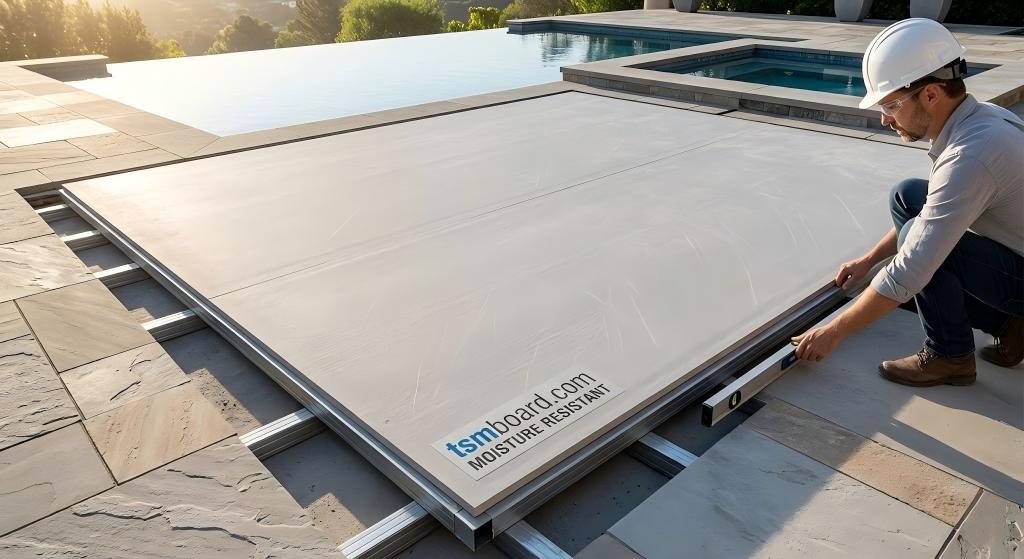
Sub-Floor Underlayment for Wet Areas
Beyond vertical wall applications, contractors universally deploy these boards horizontally as the primary underlayment for bathroom tile floors. Bathrooms frequently suffer from plumbing leaks and overflowing fixtures. Moreover, wooden sub-floors naturally expand and contract with seasonal humidity changes. By securing a 1/4-inch or 1/2-inch cement board directly over the wooden sub-floor, contractors create a critical structural decoupling layer. This layer absorbs the stress of the moving wood below, ensuring the rigid tile and grout above remain completely crack-free.
Comparison Table: Evaluating Bathroom Substrates
When designing a wet area, architects must objectively evaluate the failure points of various building materials. The following table contrasts advanced cement boards against traditional Drywall, Plywood, and MDF across critical bathroom performance metrics.
| Substrate Type | Moisture & Mold Resistance | Structural Load Capacity (Tile) | Fire Resistance Rating |
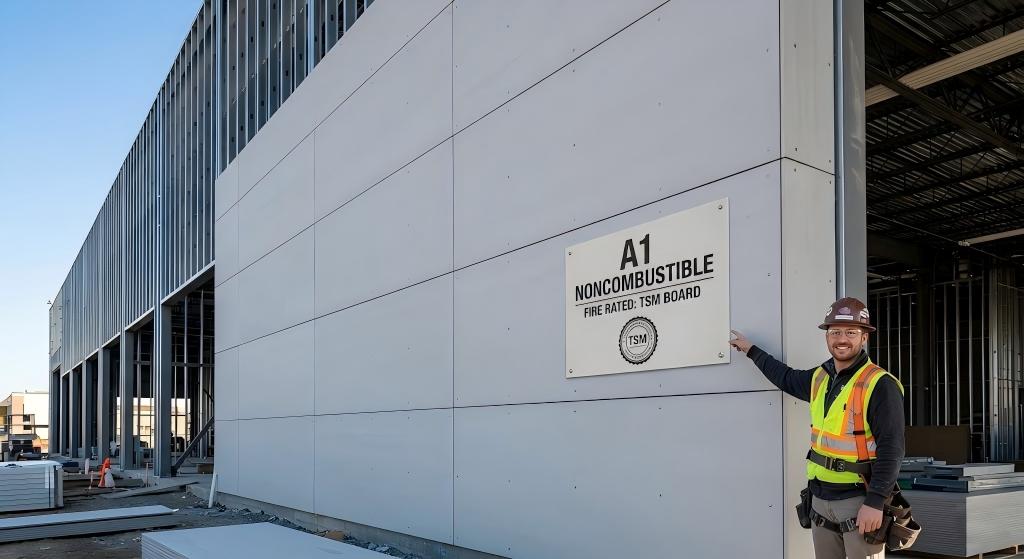
| TSM Cement Board | 100% Waterproof, Zero Cellulose | Extremely High (Supports heavy stone) | Class A1 Noncombustible |
| Traditional Drywall | Fails instantly; feeds mold rapidly. | Very Low (Crumbles when wet). | Limited (Paper facing burns). |
| Standard Plywood | Poor (Absorbs water and rots). | High (When dry), deflects under load. | Highly Combustible. |
| MDF (Fiberboard) | Terrible (Swells irreversibly). | Moderate (Disintegrates when wet). | Highly Combustible. |
As the mechanical data explicitly demonstrates, traditional organic building materials are fundamentally incompatible with high-humidity environments. For long-term structural security, utilizing a dedicated moisture resistant tile substrate is the only mathematically sound engineering decision.
Installation Best Practices & Engineering Specs
Procuring the correct waterproof substrate is only the first phase; executing a flawless installation dictates the ultimate success of the tile assembly. Contractors must strictly adhere to structural engineering protocols to manage building deflection and ensure a permanent monolithic water barrier.
Structural Framing Requirements
Cement board is a heavy, dense material that requires robust structural support. For vertical shower walls, the wooden or light-gauge steel studs must be spaced no more than 16 inches on center (O.C.). If the stud spacing exceeds this limit, the wall may flex, exceeding the strict L/360 deflection standard required for ceramic tile installations. Before mounting the boards, contractors must verify that the framing is perfectly plumb and flat; any bowing in the studs will transfer directly to the finished tile surface.
Precision Fastening Protocols
Installers must never use standard drywall screws to hang cement board in a wet area. The alkaline nature of the cement, combined with the ambient moisture, will rapidly rust standard steel screws, causing them to snap and release the board. Contractors must utilize specialized, alkali-resistant, ceramic-coated cement board screws. These fasteners must be driven completely flush with the surface of the board and spaced precisely every 8 inches along the perimeter and interior studs.
Joint Treatment and Waterproofing Membranes
To prevent water from migrating through the seams between the panels, the joints must be treated meticulously. Installers must leave a 1/8-inch expansion gap between all board edges. Subsequently, they must fill this gap with a high-quality, polymer-modified thin-set mortar and embed a 2-inch wide alkali-resistant fiberglass mesh tape directly into the wet mortar. For continuous steam rooms or zero-entry wet rooms, engineers mandate applying a secondary liquid-applied waterproofing membrane directly over the entire face of the finished cement board assembly, creating an absolute, impregnable waterproof envelope.
FAQ: 6 Technical Questions for Contractors
1. What are the manufacturing dimensional tolerances of the cement board?
Premium cement boards are manufactured under strict ISO quality control protocols. The thickness tolerance is typically held to +/- 0.5mm, and the diagonal squareness is held to extremely tight margins. This precision guarantees that the boards align perfectly flush on the wall studs, preventing ‘lippage’ (uneven height) when installing large-format porcelain tiles.
2. How do you cut a waterproof cement board on the job site?
Unlike traditional drywall, which cuts easily with a utility knife, dense cement boards require specific tooling. For straight lines, installers deeply score the board with a carbide-tipped scoring tool and snap it along the line. For complex cuts around plumbing fixtures or electrical boxes, contractors utilize an angle grinder or circular saw equipped with a continuous-rim diamond blade, ensuring they wear appropriate OSHA-compliant silica dust protection.
3. Is a poly vapor barrier required behind the cement board on exterior walls?
This depends heavily on local building codes and the specific climate zone. Generally, modern building science prefers placing a liquid-applied waterproofing membrane on the front face of the cement board (directly behind the tile). Installing a poly vapor barrier behind the cement board can sometimes trap moisture inside the wall cavity, creating a ‘moisture sandwich.’ Always consult local municipal codes.
4. Can this board support the sheer weight of 3cm heavy natural stone tiles?
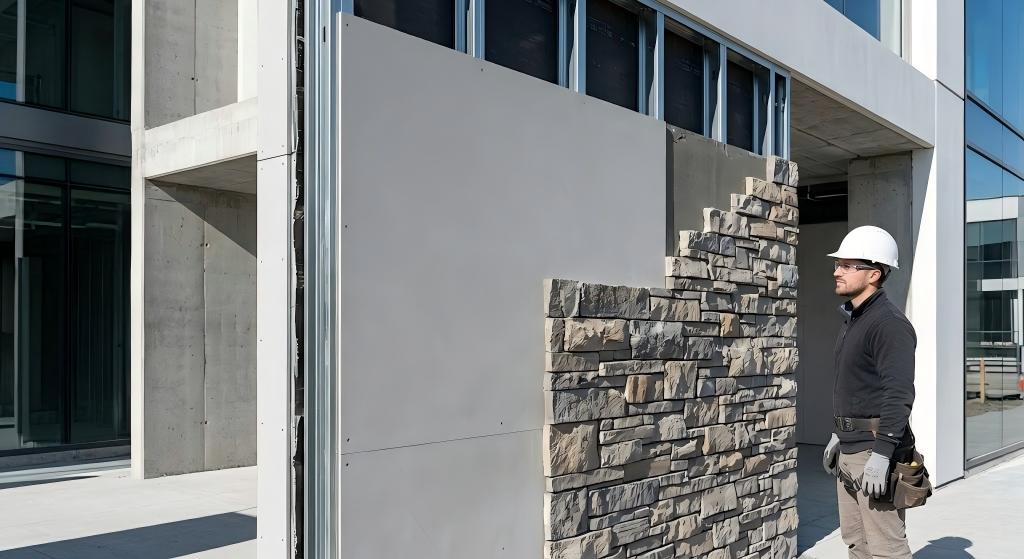
Yes. Due to the Portland cement matrix and the embedded fiberglass mesh, the board possesses incredibly high shear strength. While standard drywall will tear under the sheer weight of heavy travertine or granite slabs, a properly fastened 1/2-inch cement board easily supports extreme masonry loads without failure.
5. Does the board emit any VOCs in enclosed, heated bathroom environments?
No. Because the board is manufactured using completely inorganic materials (cement, sand, and glass fiber), it contains no formaldehyde, adhesives, or toxic resins. It produces zero Volatile Organic Compound (VOC) emissions, even when subjected to the high heat of a commercial steam room, maintaining pristine indoor air quality.
6. Can it be used for bathroom sub-floors as well as vertical walls?
Absolutely. The 1/4-inch thickness variant is specifically engineered as a floor underlayment. It is installed over a bed of thin-set mortar directly on top of the wooden plywood sub-floor and screwed down tightly. This eliminates the bounce and deflection in the wooden floor joists, preventing the floor tiles and grout lines from cracking when walked upon.
Conclusion: Safeguard Your Architectural Investments
Ultimately, the longevity and aesthetic beauty of a custom bathroom renovation depend entirely on the hidden substrates supporting the tile. Attempting to reduce construction costs by utilizing highly vulnerable, organic drywall in a high-risk moisture zone guarantees a catastrophic structural failure, leading to massive remediation costs and toxic mold exposure.
By mandating the use of a true waterproof cement board, architects and tile contractors establish an impenetrable defensive perimeter against hydrostatic pressure and vapor drive. Do not compromise the structural integrity of your real estate investments. Secure your wet areas with industry-leading materials. Explore our comprehensive product specifications and detailed installation guides by visiting the Product Details page at TSM Cement Board today, or Contact Us to build your next project with absolute confidence.