Skip to content
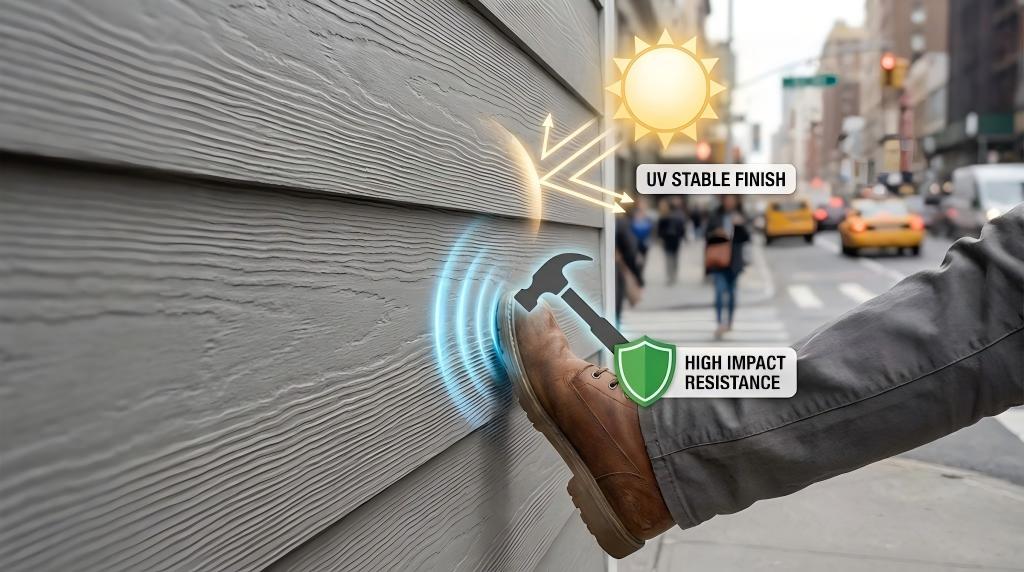
In the world of commercial interior design, there has always been a trade-off between aesthetics, durability, and speed of installation. Marble is beautiful but expensive and heavy. Wood is warm but flammable and fragile. Painted drywall is cheap but scratches easily and requires high maintenance. The industry has been waiting for a material that bridges these gaps. That material is UV coated cement board.
TSM has pioneered a process that fuses the structural rock-like strength of high-density fiber cement with the aesthetic versatility of high-definition UV-cured coatings. The result is a pre-finished wall panel that can mimic Carrara marble, oak timber, or brushed aluminum, yet withstand the impact of a hospital gurney or the scrubbing of industrial disinfectants.
This guide explores the technology behind TSM’s decorative fiber cement wall board. We will dive into the chemistry of UV curing, the sterility advantages for healthcare, and the ‘Dry Construction’ methodology that is revolutionizing project timelines.

The Technology: Photopolymerization Explained
What makes a UV coating different from standard paint? It’s the curing process. Standard paint dries by solvent evaporation—a slow process that leaves microscopic pores. UV coating is cured instantly using high-intensity Ultraviolet light.
The Chemical Bond
When the specialized fluorocarbon resin is exposed to UV light, a photo-initiator triggers a chain reaction called photopolymerization. The liquid coating instantly cross-links into a solid, impenetrable polymer network. This creates a surface that is harder than granite (3H-6H pencil hardness).
The Result: A Hermetic Seal
This surface is completely non-porous. Ink, spray paint (graffiti), coffee, and iodine cannot penetrate the surface; they sit on top and can be wiped away with alcohol or solvent. This ‘anti-graffiti’ and ‘anti-staining’ property is why UV boards are the standard for subway stations and public corridors.
Healthcare & Hygiene: The Sterile Solution
Hospitals face a unique challenge: Hospital-Acquired Infections (HAIs). Walls must be cleaned frequently with harsh chemicals like bleach, peroxide, and quaternary ammonium.
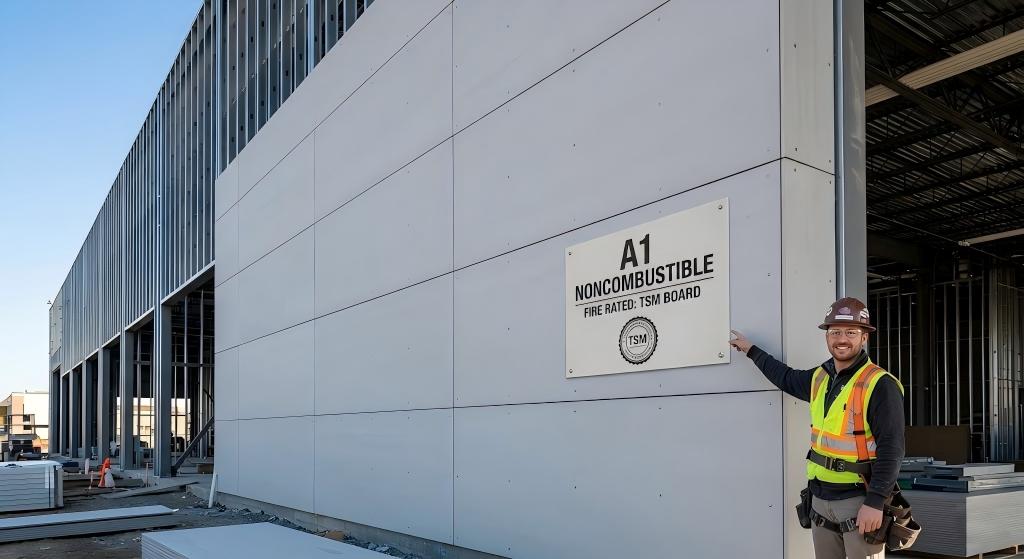
Standard paint dissolves under this chemical assault. TSM interior cement board with UV coating is chemically inert to these disinfectants. Furthermore, because the surface is seamless and smooth, there are no pores for bacteria like MRSA or C. diff to hide.cleanroom wall cladding. In operating theaters, the board provides a sterile field that is also Class A1 fireproof—a combination that plastic (PVC) wall protections cannot match.kitchen backsplash board or in modern retail spaces.
This makes it the ultimate
Design Versatility: The Chameleon Effect

Architects no longer need to sacrifice fire safety for design. Through high-definition transfer technology, TSM boards can replicate virtually any material.
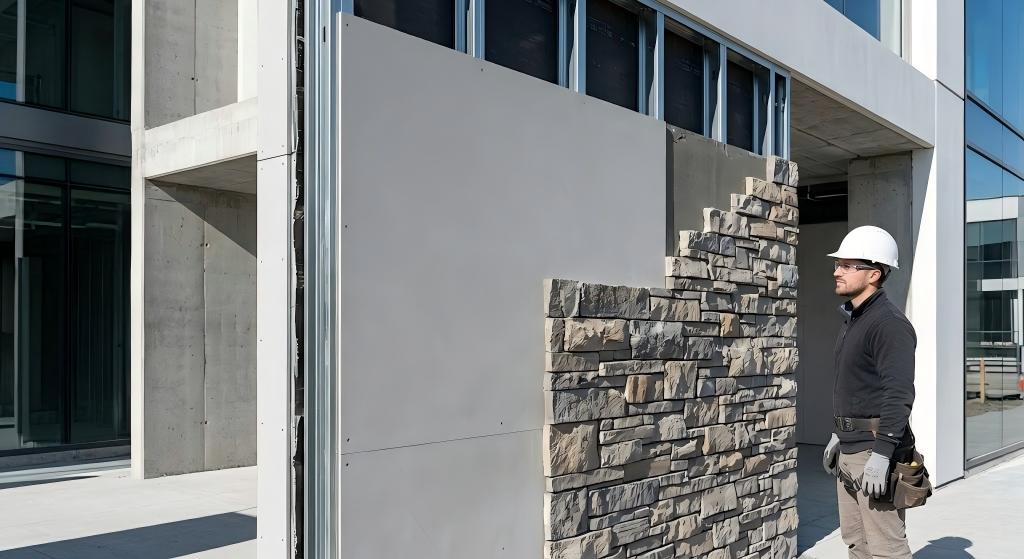
1. The Faux Stone Collection: Replicating the veining of Italian marble or granite. Used in hotel lobbies and elevators where real stone weight is prohibitive.
2. The Wood Grain Series: Offering the warmth of walnut or teak without the fire risk. Perfect for office feature walls.
3. Solid High-Gloss: A glass-like finish often used as a
Installation: The “Dry Construction” Speed
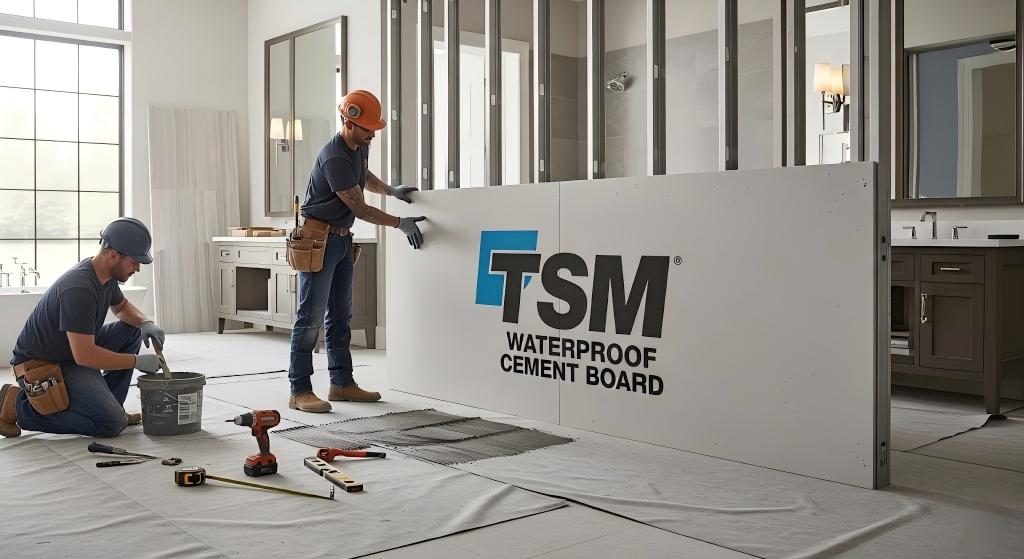
Time is money. Traditional tiling or stone cladding requires ‘wet trades’—mortar mixing, setting time, grouting, and drying. It is messy and slow.
TSM UV Boards utilize a ‘Dry Hanging’ or ‘Adhesive’ system:
• Structural Adhesive Method: For flat walls, a combination of double-sided foam tape (for instant grab) and structural silicone (for permanent bond) allows panels to be installed in minutes.
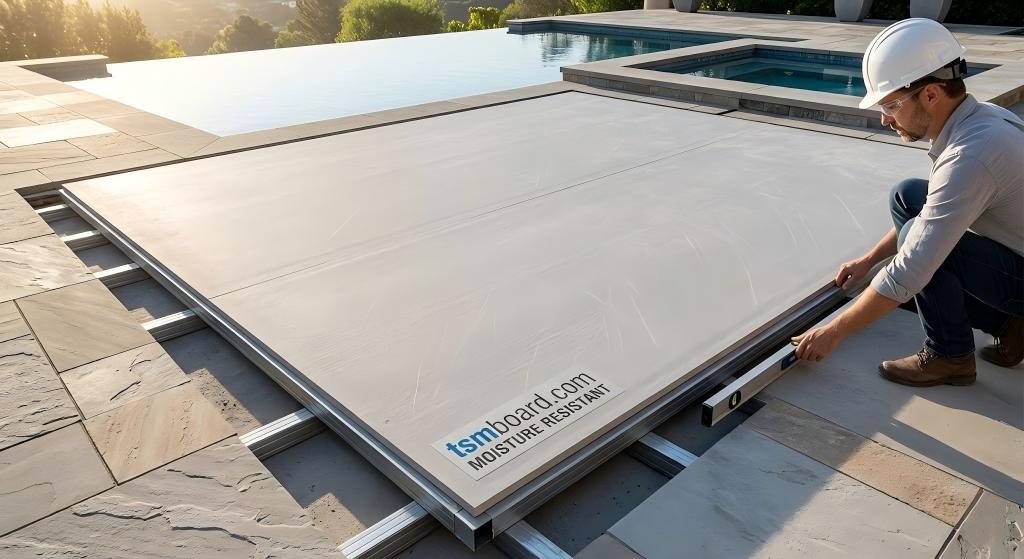
• Aluminum Profile Method: Decorative aluminum trims (H-joiners, Corner guards) clamp the boards to the wall. This creates a modular, industrial look and protects the edges.
A team of two can cover 100 square meters of wall in a single day, reducing the fit-out schedule by 70% compared to tiling.
Performance Matrix: UV Board vs. Alternatives

| Feature | TSM UV Board | Ceramic Tile | HPL (Laminate) |
| Installation Speed | Fast (Large sheets) | Slow (Small units) | Medium |
| Impact Resistance | High (Fiber Cement Core) | Brittle (Cracks) | Medium |
| Fire Rating | Class A1 | Class A1 | Class B (Combustible) |
| Grout Lines | None (Hygienic) | Yes (Mold risk) | None |
| Weight | Medium | Heavy | Light |
FAQ: Decorative Specifications
Q: Is the color fade-resistant?
A: Yes. The UV curing process locks in the pigments. For interiors, we guarantee no visible fading for 20 years. For exteriors, we use a specific Fluorocarbon UV coating with enhanced weatherability.
Q: Can I use it in a shower?
A: Yes, provided the joints are sealed correctly with silicone or waterproof aluminum profiles. It is an excellent grout-free alternative to tiles.
Q: How do I cut it?
A: Because the surface is hard, you should use a circular saw with a fine-tooth diamond blade. Cut with the decorative face up to prevent chipping the UV coating. Masking tape along the cut line helps ensure a perfect edge.
Conclusion: The Future of Interiors
UV Coated Cement Board represents the convergence of heavy industry and high fashion. It brings the durability of a tunnel liner into the elegance of a hotel lobby.
For project managers, it offers the holy grail: fast installation, low maintenance, and high design impact. View our Color Chart or explore our Project Gallery to see how TSM can transform your next space.