Skip to content
Introduction: The Foundation of Outdoor Living Construction

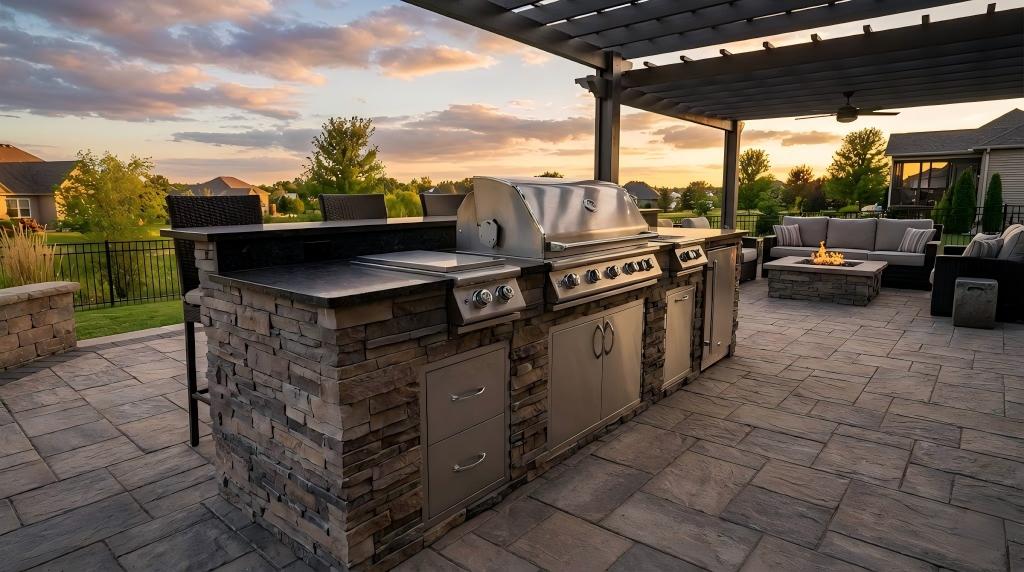
Executing a flawless backyard renovation requires materials engineered specifically for exterior environments. Selecting the right outdoor kitchen cement board is the most critical structural decision a contractor will make when building a BBQ island. In recent years, the demand for luxury outdoor living spaces has skyrocketed. Homeowners are no longer satisfied with a standalone grill on a patio; they demand fully integrated outdoor kitchens complete with sinks, refrigerators, pizza ovens, and heavy stone countertops.
Consequently, the structural substrate hiding beneath the beautiful masonry must be infallible. When builders attempt to cut costs by using traditional interior materials—such as standard plywood, oriented strand board (OSB), or regular drywall—catastrophic failure is inevitable. These organic materials simply cannot withstand the relentless assault of ambient moisture, extreme temperature fluctuations, and direct heat from cooking appliances.
Therefore, transitioning to an inorganic, high-performance BBQ island substrate is a non-negotiable requirement for professional contractors. In this comprehensive technical guide, we will analyze the core environmental challenges of outdoor construction, evaluate the material science behind advanced cement panels, and provide a detailed methodology for cladding your structures with heavy stone and stucco.
The Core Challenge: Environmental Degradation
To understand why traditional framing and sheathing fail outdoors, we must examine the specific environmental forces at play in a patio kitchen build. Outdoor structures face a continuous, 365-day assault from the elements.
The Physics of the Freeze-Thaw Cycle
In regions that experience cold winters, water presents the greatest threat to masonry structures. Organic substrates like plywood are highly hygroscopic, meaning they absorb moisture from the air and from rain. When the temperature drops below freezing, the water trapped inside the wood cells expands by approximately 9%. This expansion exerts immense internal hydrostatic pressure.
As the temperature warms and the ice melts, the material contracts. Repeating this freeze-thaw cycle dozens of times over a single winter completely destroys the structural integrity of the wood. Furthermore, as the wood expands and contracts, it shears the mortar bond holding the exterior stone veneer or stucco in place, leading to cracking and delaminating facades.
Extreme Thermal Stress and UV Exposure
Beyond moisture, outdoor kitchens endure extreme localized heat. A high-end built-in gas grill can generate internal temperatures exceeding 600°F (315°C). If you mount this appliance into a combustible wooden frame sheathed with standard plywood, you create a severe fire hazard. Over time, continuous exposure to high heat lowers the ignition temperature of the surrounding wood through a process called pyrolysis. Eventually, a stray spark or sustained heat transfer can ignite the internal framing.
Why Outdoor Kitchen Cement Board is the Ultimate Solution
To combat these extreme environmental stressors, modern architecture relies on advanced material science. A premium weather-resistant cement board completely re-engineers the structural envelope of an outdoor kitchen.
The Composition of True Resilience
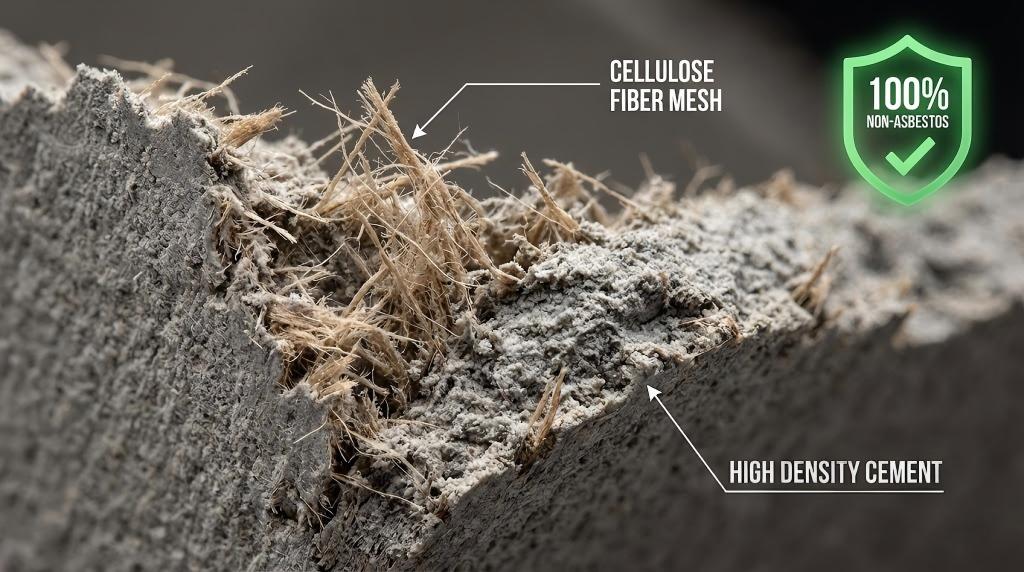
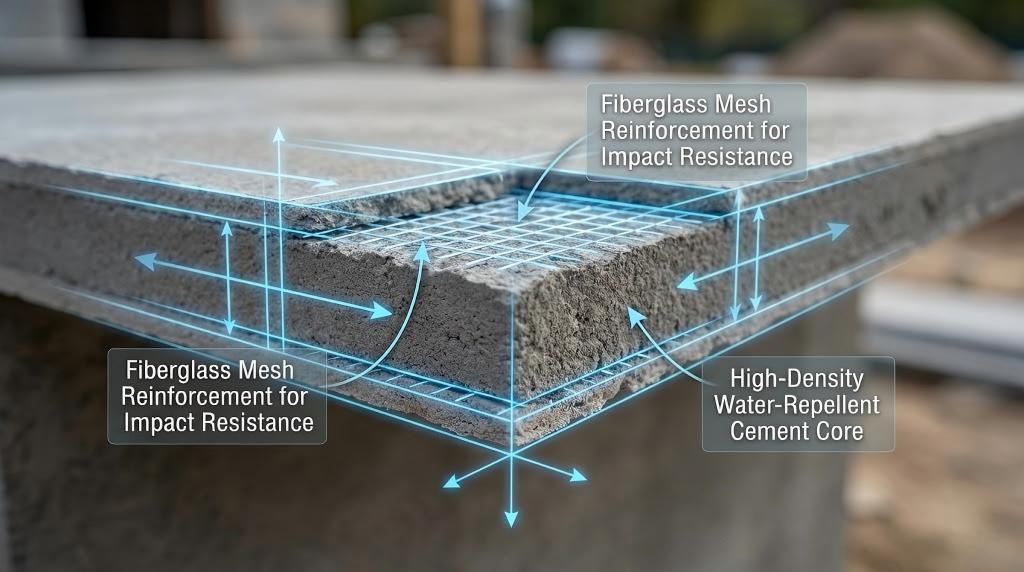
High-quality cement boards consist of a homogenous mixture of Portland cement, fine sand, and water, reinforced on both sides with an alkali-resistant fiberglass mesh. Crucially, this composition contains absolutely zero organic matter. Therefore, it provides zero food source for mold, mildew, or termites.
A1 Noncombustible Fire Rating
Safety is paramount when designing a cooking area. The foremost advantage of an engineered cement board is its thermal resistance. Top-tier boards achieve an A1 noncombustible fire rating under stringent international testing standards. They will not burn, they will not melt, and they will not release toxic smoke when exposed to direct flames. Consequently, builders can safely mount high-BTU gas grills, charcoal smokers, and pizza ovens directly into the island structure without fearing radiant heat combustion.
Absolute Dimensional Stability
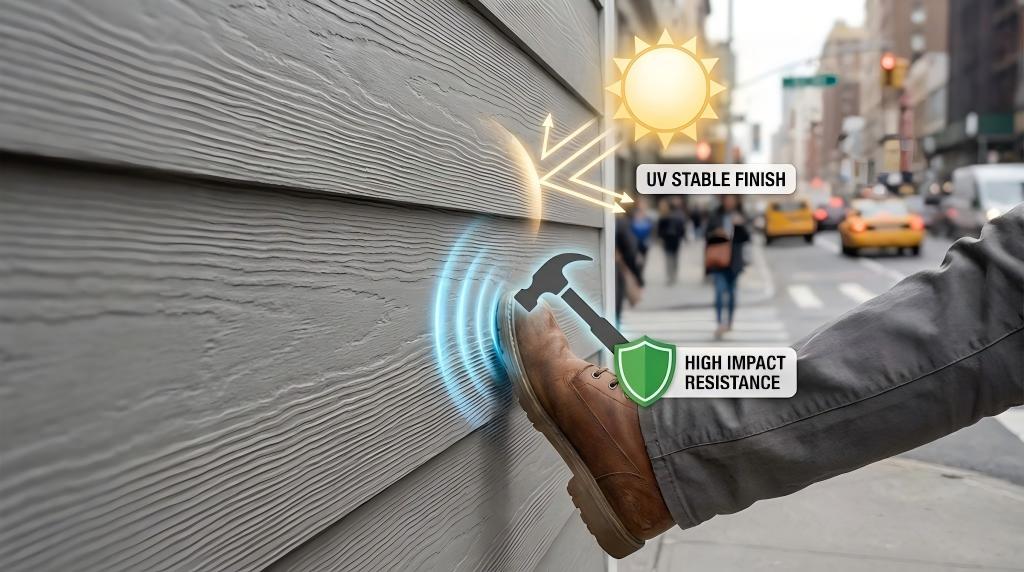
Unlike wood, which swells when wet and shrinks when dry, a highly compressed exterior grade board remains dimensionally stable regardless of the weather. It possesses an exceptionally low coefficient of thermal expansion. Because the board does not move, flex, or warp, the heavy stone veneer, ceramic tile, or stucco applied to its surface remains perfectly intact year after year. Ultimately, this rigid stability eliminates costly contractor callbacks and ensures a permanent backyard installation.
Comparison Table: Cement Board vs. Pressure-Treated Wood
Contractors often debate the merits of framing and sheathing with pressure-treated lumber versus using metal studs clad with cement board. The following table breaks down the technical differences across key performance metrics.
| Performance Metric | Cement Board on Metal Studs | Pressure-Treated Wood Frame |
| Combustibility | Class A1 (Completely Noncombustible) | Highly Combustible (Major Fire Hazard) |
| Moisture Resistance | Excellent (Inert when wet) | Poor (Swells, warps, and eventually rots) |
| Freeze-Thaw Durability | Exceptional (Maintains structural integrity) | Low (Prone to internal fracturing) |
| Veneer Bond Strength | Maximum (Direct mortar application) | Weak (Requires extensive waterproofing/lath) |
| Pest Resistance | 100% Termite Proof | Vulnerable over time as chemicals leach |
| Total Lifespan | 50+ Years | 5 to 10 Years in uncovered areas |
As the engineering data illustrates, while wood might seem easier to cut for DIYers, it introduces unacceptable liability for professional builders. Utilizing an inorganic patio kitchen building envelope is the only mathematically sound choice for long-term exterior durability.
Designing Your Backyard Oasis: Cladding Techniques
The raw cement board provides the structural muscle, but the exterior cladding provides the aesthetic beauty. Because cement board has a textured, porous surface, it accepts polymer-modified thin-set mortars and base coats exceptionally well. Here is how professionals handle different high-end finishes.
Applying Heavy Natural Stone Veneer
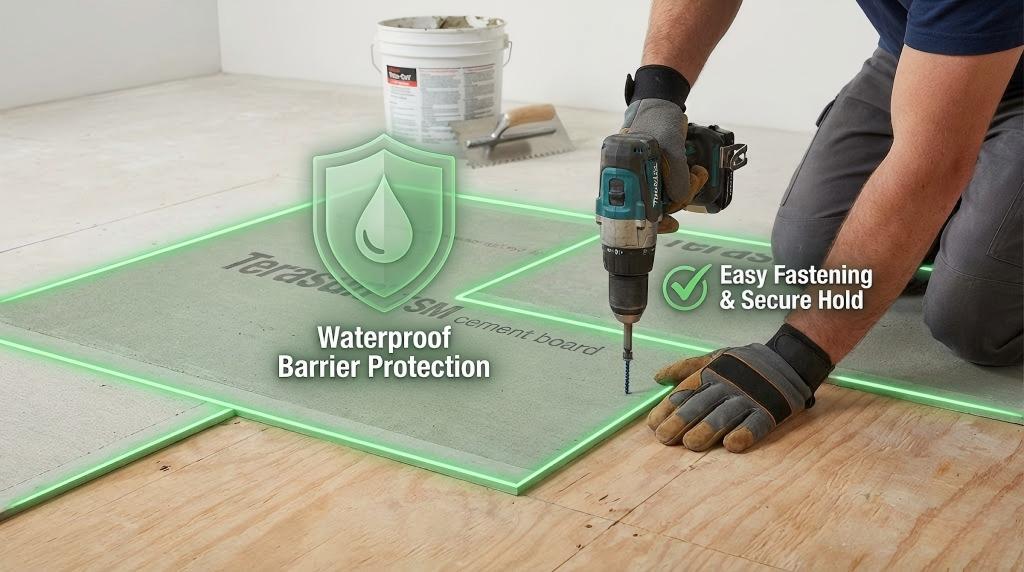
Natural stone transforms a basic grill station into a luxury architectural feature. However, natural stone is incredibly heavy. To ensure a permanent bond, you must follow specific protocols. First, tape all cement board seams using an alkali-resistant fiberglass mesh tape and bed it in exterior-grade thin-set.
If your natural stone exceeds 15 pounds per square foot, building codes often require you to attach a galvanized expanded metal lath over the cement board using corrosion-resistant roofing nails or screws. Next, apply a scratch coat of Type S mortar over the lath and allow it to cure. Finally, back-butter your stone pieces with a rich polymer-modified mortar and press them firmly into the scratch coat. The cement board acts as the rigid, unyielding base that prevents the heavy stone from sagging.
Executing a Flawless Stucco Finish
For a sleek, modern, Mediterranean aesthetic, stucco is a highly popular choice. Cement board is the ultimate substrate for stucco because it does not draw the moisture out of the stucco mix too rapidly. To apply stucco, first seal the board joints with mesh tape. Subsequently, apply a high-quality acrylic bonding agent to the surface. Trowel on your fiberglass-reinforced base coat directly onto the board. Once cured, apply your final color-integrated synthetic stucco finish coat. The rigidity of the cement board ensures the stucco will never develop hairline cracks from substrate deflection.
Supporting Heavy Granite Countertops
Outdoor kitchens frequently feature massive, 3cm-thick granite or concrete countertops. These tops exert massive point loads on the island structure. You must install the cement board over vertical steel or heavy-gauge aluminum studs spaced no more than 16 inches on center. The cement board distributes the weight of the granite evenly across the vertical framing members, preventing the countertop from cracking under its own weight over time.
FAQ: 6 Expert Questions Answered
1. Is the cement board completely weatherproof on its own?
While the board itself will not rot, degrade, or lose structural integrity when exposed to rain, it is not a waterproof membrane. It is water-durable, but moisture can eventually pass through it to the framing behind. Therefore, if you are building an outdoor kitchen with enclosed, dry storage cabinets beneath the counter, you must apply a liquid waterproofing membrane (like RedGard) over the cement board before applying your stone or tile finish.
2. How thick should the board be for an outdoor kitchen island?
For the vertical walls of a BBQ island mounted over metal or wood studs spaced at 16 inches on center, you must use a 1/2-inch (12mm) thick board. Do not use 1/4-inch boards for vertical wall applications, as they lack the necessary rigidity to hold heavy exterior stone veneer and will flex under pressure.
3. Can I apply manufactured stone veneer directly to the board?
Yes. Manufactured stone (often called cultured stone) is significantly lighter than natural stone. Assuming the cement board is securely fastened to a rigid frame, you can apply a polymer-modified thin-set mortar directly to the rough side of the board and adhere the manufactured stone without the need for additional metal lath.
4. Do I need to tape the seams for outdoor use?
Absolutely. You must treat the seams to create a unified structural envelope. Use a 2-inch wide, alkali-resistant fiberglass mesh tape. Embed the tape completely using an exterior-grade, polymer-modified thin-set mortar. If you skip this step, the micro-movements of the individual panels will cause your exterior stucco or grout lines to crack precisely along the panel joints.
5. How do you cut the board without cracking it?
For straight cuts on an outdoor job site, the cleanest method is to use an angle grinder equipped with a 4-inch or 4.5-inch continuous-rim diamond blade. This slices through the cement and fiberglass matrix effortlessly. Always wear a NIOSH-approved respirator mask and safety goggles, as cutting cement products generates hazardous crystalline silica dust.
6. Does the board degrade under extreme heat from the BBQ grill?
No. High-quality cement boards carry an A1 noncombustible rating. They contain no plastics, resins, or organic fibers that can melt or burn. They effectively act as a thermal shield, protecting the internal framing of your island from the intense radiant heat generated by large drop-in gas grills or charcoal kamado cookers.
Conclusion: Build It Once, Build It Right
Ultimately, the success of your backyard renovation hinges entirely on what lies beneath the surface. Upgrading your building practices from vulnerable wood to an advanced, inorganic substrate is the defining difference between a project that lasts five years and one that lasts fifty.
By utilizing professional-grade outdoor living construction materials, contractors can eliminate the risks of fire, rotting, and freeze-thaw degradation. Protect your reputation and your client’s investment by refusing to compromise on the structural envelope. Explore the ultimate range of heavy-duty outdoor kitchen cement board solutions today, and ensure your next BBQ island is truly built in stone.