Skip to content
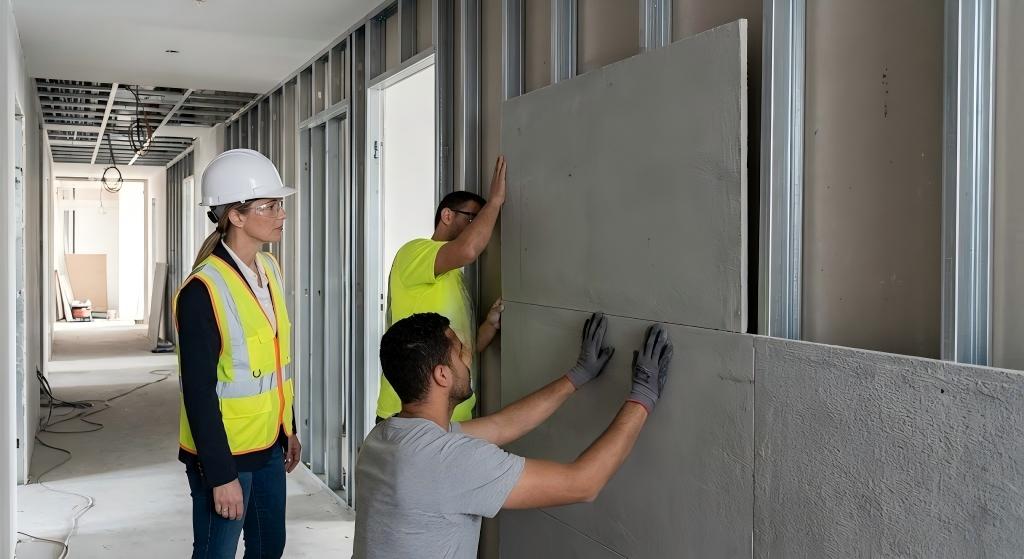
Introduction: The Invisible Threat of Acoustic Transition
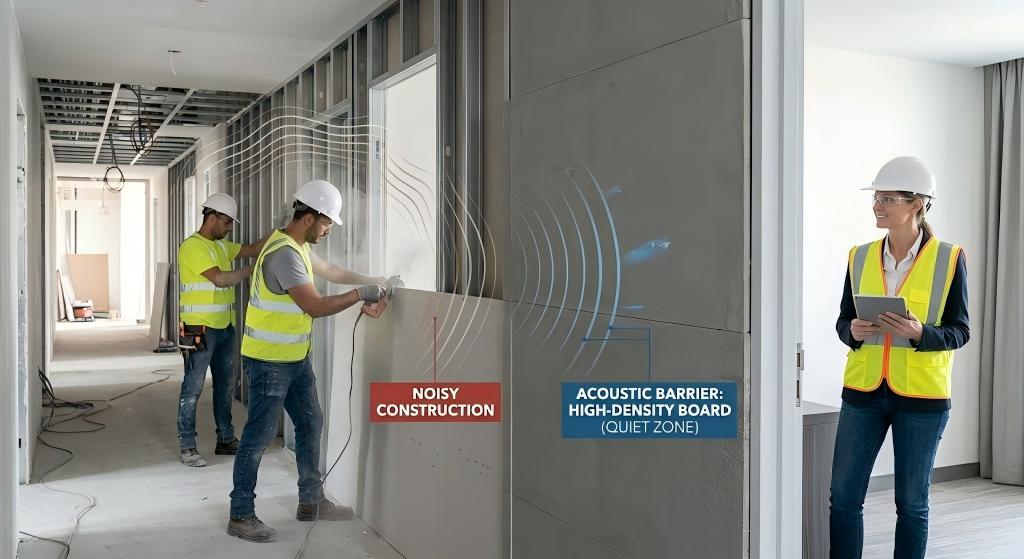
In the demanding landscape of commercial architecture, developers constantly battle visible structural vulnerabilities like chronic water rot and catastrophic fire risks. However, they frequently overlook an equally damaging, invisible liability: acoustic transition. To achieve uncompromising acoustic privacy while simultaneously resolving extreme moisture and fire threats, engineers specify high-density cement boards as the ultimate structural substrate. In modern high-occupancy environments—specifically luxury hotels, multi-family residential complexes, and Class A commercial offices—noise pollution represents a fundamental failure of architectural design.
When contractors utilize standard gypsum drywall or lightweight wood-based panels for internal demising walls, they inadvertently install a flexible structural membrane that easily vibrates in response to sound energy. Building science demonstrates that sound moves via two primary vectors: airborne transmission (speech, television media) and structure-borne transmission (footfall impact, mechanical vibration). Standard organic materials possess insufficient mass and density to block either vector efficiently. This structural inadequacy leads to a distinct lack of acoustic privacy, diminished tenant satisfaction, and ultimately, significantly lower commercial lease rates. Furthermore, utility areas prone to severe water intrusion, such as subterranean pumping stations or mechanical HVAC rooms, require a robust architectural solution that simultaneously addresses hydro-stability, fire resistance, and intense noise control.
Consequently, for commercial projects requiring a rigid, permanent defense against dynamic sound transmission, specifying an engineered heavy duty construction board is an absolute necessity. By integrating these advanced panels into standard partition assemblies, structural engineers directly tackle acoustic transition at the molecular level. In this comprehensive technical guide, we will analyze the precise physics of Mass Law, explore the inorganic metallurgy of Portland cement substrates, and outline the strict installation specifications required to achieve peak Sound Transmission Class (STC) ratings.
Core Physics & Material Advantages
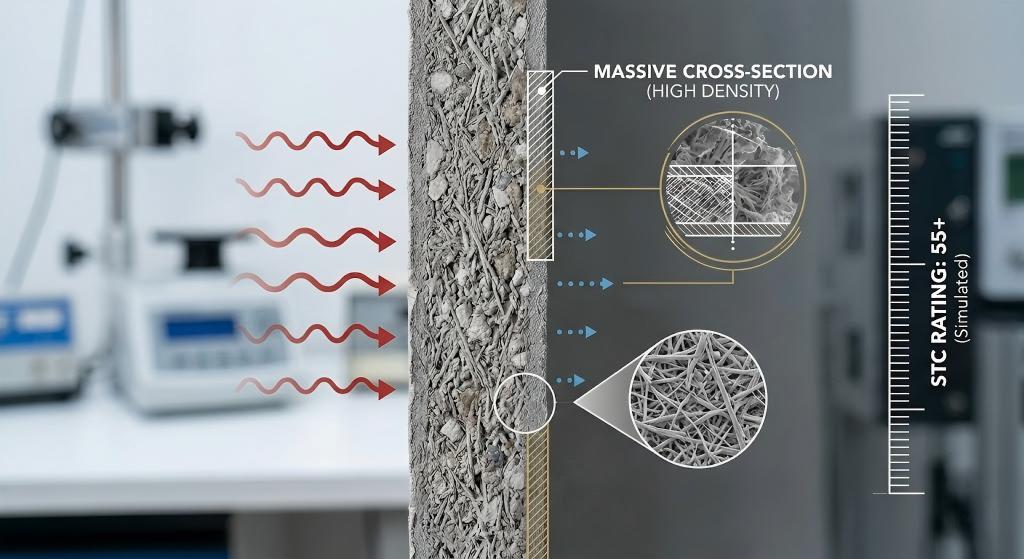
To completely comprehend how high-performance cementitious panels attenuate violent structural and airborne noise, we must dissect the fundamental building physics and inorganic chemistry of the substrate. In the field of architectural acoustics, mass dictates the primary barrier against sound transmission—a scientific principle universally known as the Mass Law.
The Inorganic Portland Cement Matrix
High-performance manufacturers engineer premium TSM cement boards utilizing a massive, highly compressed matrix of inorganic Portland cement, fine silica sand, and water. They reinforce this dense core with layers of alkali-resistant fiberglass mesh. Unlike standard building panels that rely on pulverized gypsum cores, paper facings, or combustible wood pulp, these specialized acoustic boards are 100% cellulose-free. This specific molecular geometry creates a profoundly dense and heavy substrate. Furthermore, contemporary facilities strictly follow precise engineering specs to guarantee that the panels remain completely asbestos-free and environmentally stable. The resulting architectural board is environmentally inert, does not off-gas toxic Volatile Organic Compounds (VOCs), and remains structurally static under extreme acoustic pressure.
Managing Acoustic Transition via Mass Law
Sound energy functions as mechanical kinetic energy traveling via invisible wave pressure. When an airborne sound wave strikes a lightweight, flexible substrate like traditional drywall, the entire panel vibrates. This vibration turns the opposite face of the wall into a secondary speaker diaphragm that re-radiates the sound into the adjacent room. To halt this transition permanently, acoustic engineers deploy massive weight. An inorganic sound insulation board possesses intense physical mass per square foot. According to the acoustic Mass Law, every doubling of the partition’s mass results in a theoretical 6-decibel (dB) reduction in sound transmission. Because the intense inorganic crystalline cement matrix possesses immense density, it physically reflects the acoustic energy rather than vibrating, severely attenuating the noise transition across the critical speech frequencies.
Structural Rigidity and Mechanical Damping
While extreme mass blocks airborne sound, halting structure-borne noise (like heavy footfall or mechanical vibration) requires decoupling and structural damping. The exceptionally rigid composition of the cement panel provides a superior damping substrate when contractors combine it with resilient channels or acoustic isolation clips. When standard wood substrates warp or swell due to seasonal humidity changes, they create rigid mechanical ‘shorts’ that instantly bypass the sound isolation system. The profound dimensional stability of an advanced cement board ensures it does not swell, shrink, or delaminate. Therefore, isolated framing systems remain truly isolated, permanently preventing impact energy from traveling through the wall structure.
Critical Applications & Real-World Use Cases
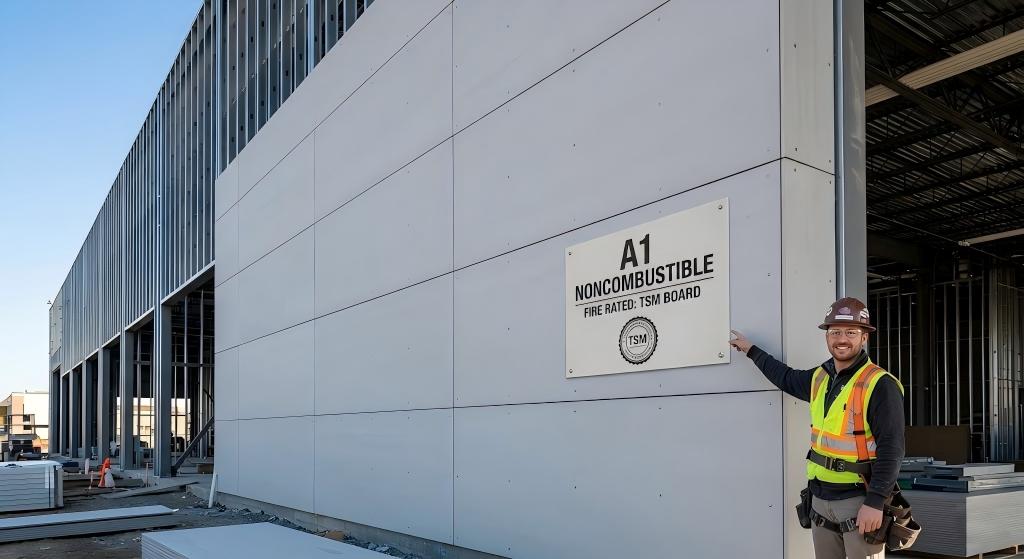
The supreme structural rigidity, absolute immunity to toxic mold, Class A1 noncombustible fire rating, and uncompromising acoustic attenuation of extruded cement panels allow contractors to deploy them across the most punishing commercial architectural zones. Engineers utilize these advanced substrates wherever absolute compartmentalization and acoustic privacy are legally mandated.
Luxury Hospitality and Multi-Family Residential Units
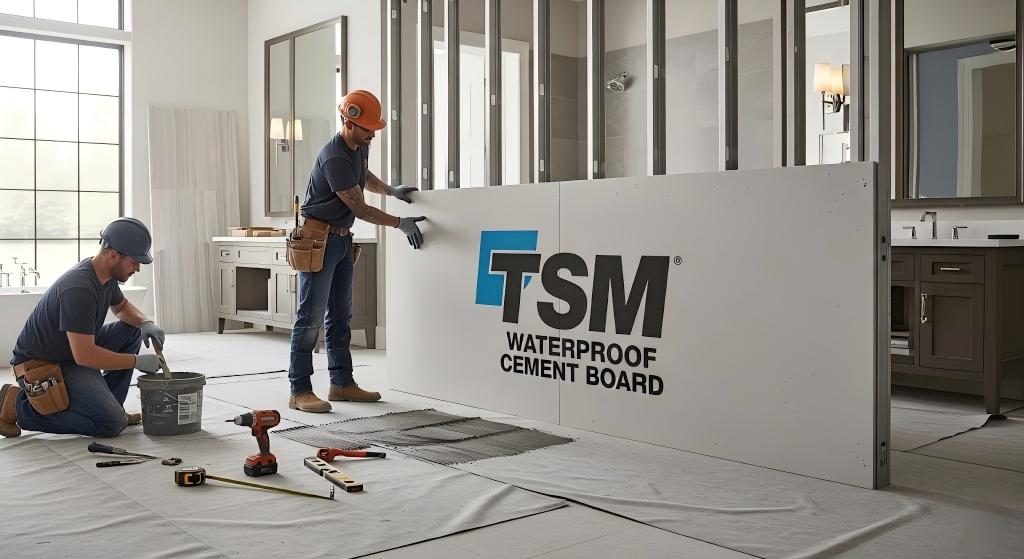
In the competitive luxury hospitality sector, inter-room privacy serves as the primary determinant of guest satisfaction scores. Hotels located in busy urban cores or situated near subterranean subway systems must mitigate massive exterior and interior noise pollution. Historically, contractors attempted to build multi-layered gypsum assemblies, which often failed miserably due to workmanship errors and low mass density. Consequently, modern hotel architects strictly specify unyielding hotel partition walls utilizing dense cement panels. Installers fix the heavy cement boards over staggered steel framing with sound-absorbing mineral wool packed in the cavity. Because the cement board will never warp or degrade, it maintains an airtight acoustic seal for decades, guaranteeing the crack-free monolithic assembly necessary to achieve and maintain superior STC ratings exceeding 60.
Commercial Office Spaces and Confidential Conference Rooms
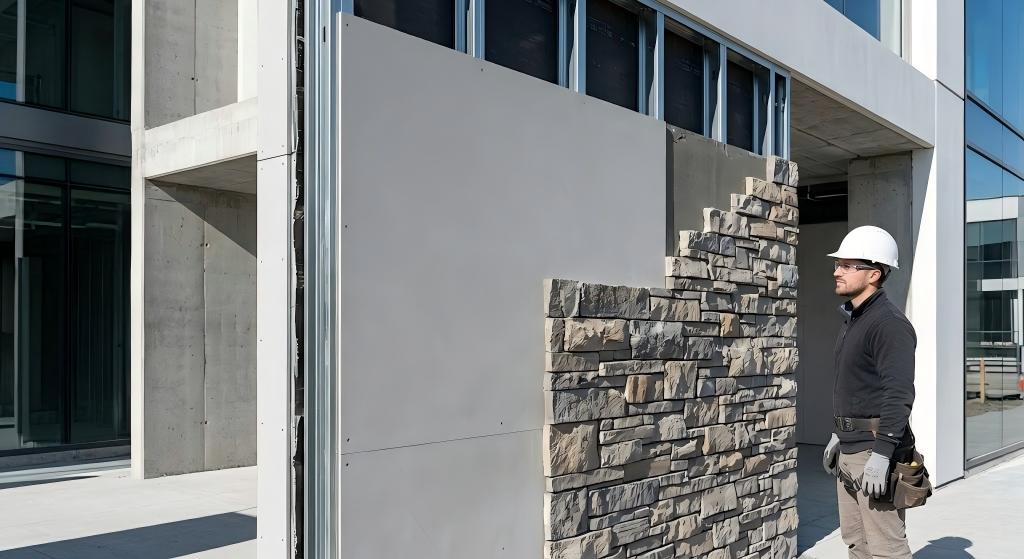
Absolute confidentiality represents a critical operational asset in Class A commercial real estate. Elite law firms, financial institutions, and specialized medical facilities require conference rooms and private executive offices that eliminate airborne sound transition entirely. Standard interior partition walls consistently allow sensitive data to leak via speech transmission through the drywall. Furthermore, standard walls cannot support heavy architectural finishes. Therefore, developers rigorously utilize these highly capable acoustic wall panels as the primary structural sheathing for rooms requiring absolute privacy. The immense strength and mass of the panel also allow for the direct cladding of heavy stone veneer or architectural wood paneling without sacrificing structural sheathing performance or acoustic isolation.
Mechanical Rooms, HVAC Corridors, and Subterranean Pumping Stations
Massive commercial high-rises house giant HVAC chillers, industrial boilers, and subterranean water pumping stations that generate devastating, low-frequency sound energy and severe mechanical vibration. If standard drywall lines these utility rooms, the paper facing rapidly grows mold in the high-humidity environment, and the lightweight panels resonate, actively amplifying the low-frequency mechanical drone. Consequently, structural engineers mandate that contractors construct these mechanical partitions using heavy-gauge steel framing clad in premium cement boards. The dense Portland matrix safely absorbs the aggressive acoustic pressure and dampens the vibration. Therefore, its waterproof composition permanently prevents water rot from subterranean vapor drive or accidental plumbing bursts.
Comparison Table: Evaluating Commercial Acoustic Substrates
When engineering a demising wall partition, commercial architects must objectively evaluate the specific mechanical and physical failure thresholds of various building materials. The following table mathematically contrasts advanced cement boards against traditional Type X Drywall, Plywood, and MDF across critical structural and acoustic performance metrics.
| Material Substrate | Acoustic Mass / Sound Attenuation | Structural Load & Compressive Strength | Fire Resistance Classification | Biological & Water Resilience |
| TSM Cement Board | Extremely High (Supreme Mass Law performance). | Extremely High (Supports heavy stone/tile). | Class A1 (100% Noncombustible). | Exceptional (100% Mold-proof). |
| Type X Fire Drywall | Low (Gypsum resonates human speech). | Very Low (Gypsum core crumbles under point load). | Limited (Treated paper facing eventually fails). | Very Poor (Feeds toxic mold). |
| Standard Plywood | Moderate (Resonates dynamic low-frequency noise). | High (When dry), bows under load. | Highly Combustible (Class D/E). | Poor (Delaminates and rots). |
| MDF (Fiberboard) | Moderate (Dense, but dynamic resonance). | Terrible (Contains zero shear strength). | Highly Combustible. | Worst (Swells instantly). |
As the mechanical and physical data explicitly demonstrates, traditional organic building materials are fundamentally incompatible with high-end commercial acoustic engineering. For unyielding life safety, asset protection, and guaranteed acoustic privacy, utilizing a truly inorganic, high-density cement board is the only scientifically sound engineering decision.
Installation Best Practices & Engineering Specs
Procuring an immune-level acoustic substrate is merely the first phase; executing a flawless installation dictates the ultimate success of the STC rating building materials. General contractors must strictly adhere to structural engineering protocols to manage flanking paths and ensure a permanent, airtight acoustic barrier.
Steel Framing, Resilient Channels, and Deflection Tolerances
High-rise buildings naturally deflect and sway under dynamic wind loads. Therefore, when constructing rigid acoustic demising walls, structural engineers mandate the use of galvanized steel studs rather than combustible wood framing, which easily warps. Contractors must space the steel studs no more than 16 inches on center (O.C.). To decouple the wall mechanically, installers mount metal resilient channels horizontally across the studs before attaching the cement board. Crucially, the wall assembly must incorporate ‘slip track’ deflection channels at the ceiling joint to absorb building movement without dynamic loading and cracking the rigid cement panels.
Precision Fastening Protocols in Damp Acoustic Zones
When installing heavy panels in areas prone to subterranean vapor drive, standard steel drywall screws will rapidly corrode and snap. Contractors must strictly utilize highly specialized, alkali-resistant, ceramic-coated cement board screws. These advanced fasteners feature self-drilling tips and cutting nibs under the head to perfectly countersink into the dense Portland matrix. Installers must drive the fasteners perfectly flush with the face of the board and space them precisely every 8 inches along the perimeter and internal framing members to ensure absolute structural continuity.
Acoustic Sealant and Joint Treatment to Prevent Flanking
Mass efficiently blocks direct sound, but invisible air leaks destroy acoustic integrity entirely. A soundproof partition is only as strong as its perimeter seals. Installers must carefully offset (stagger) the joints on opposite sides of the partition wall cavity. Furthermore, contractors must apply a thick bead of high-quality, non-hardening acoustical sealant at the top and bottom tracks before fastening the boards to ensure a permanent, airtight connection. Penetrations for electrical boxes or mechanical piping must receive continuous acoustic caulking. Finally, installers treat the joints meticulously using alkali-resistant fiberglass mesh tape embedded in polymer-modified mortar, creating a monolithic documents assembly that entirely blocks smoke, fire, and sound migration.
FAQ: 6 Technical Questions for Commercial Architects
1. What are the dimensional tolerances and sheet sizes available for this board?
Premium high-density boards are manufactured under extreme ISO 9001 quality control parameters. Standard tolerances are held rigorously: Thickness is +/- 0.5mm, and diagonal squareness is +/- 2.0mm. This extreme precision guarantees that the boards align perfectly flush on steel framing studs, preventing hidden air gaps that destroy acoustic integrity and complicate the final finished skim coating.
2. How do installers manage silica dust when cutting these dense panels on site?
Because the board utilizes a highly compressed, homogenous matrix of Portland cement and silica sand, contractors must cut it using an angle grinder or circular saw equipped with diamond continuous-rim blades. To comply with global occupational health standards (like OSHA), operators must rigorously utilize tools equipped with specialized HEPA-filtered dust extraction vacuums, and must consistently wear N95 Particulate respirators during all cutting operations.
3. Does this board possess a Class A1 noncombustible fire rating for commercial use?
Yes. In high-rise hotel partition walls and subterranean mechanical corridors, absolute life safety is paramount. High-density cement boards are tested according to EN 13501-1 Class A1 noncombustible standards. Because they are 100% inorganic, they will not ignite, warp, smoke, or melt when subjected to extreme heat, effectively preventing vertical structural collapse during a severe conflagration.
4. What specific type of acoustical sealant should architects specify for the track connections?
Architects should strictly specify a high-performance, non-hardening, synthetic rubber acoustical sealant. Unlike standard commercial silicone or latex caulk, specialized acoustical sealant remains highly flexible for decades, maintaining the critical airtight seal between the heavy-density cement board and the surrounding building structure even during dynamic wind load deflection and extreme thermal cycles.
5. Can the board be used horizontally for commercial flooring acoustic underlayment?
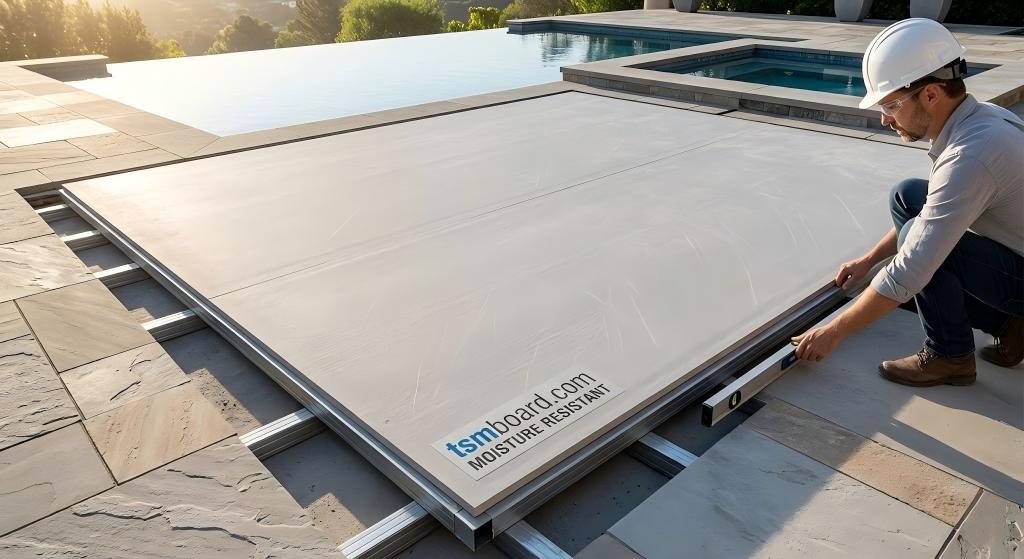
Absolutely. The massive compressive strength of the cement matrix makes it a superior structural underlayment for heavy-traffic commercial office spaces. While vertical boards address airborne noise, horizontal boards effectively address structure-borne impact noise (footfall). It creates a rigid, decoupled floor system that dampens impact energy, preventing noise transmission through the floor joists to the commercial level directly below.
6. Can installers paint or plaster directly over the board for finished demising walls?
Yes. While it is frequently utilized as a hidden, heavy-duty substrate for ceramic tile, stone veneer, or decorative acoustical panels, it can easily serve as a Class A finished interior wall. Installers must tape the joints with fiberglass mesh, apply a skim coat of compatible cementitious setting compound to achieve a perfectly smooth Level 4 finish, and finally seal the highly alkaline surface using a specialized masonry primer before applying any premium exterior-grade acrylic or elastomeric paint.
Conclusion: Fortifying Commercial Assets Against Noise
Ultimately, the physical survival, indoor air quality, and economic leasing value of a commercial high-rise or multi-family residential unit are entirely dependent upon the metallurgical and chemical integrity of its hidden wall substrates. Attempting to reduce upfront construction capital by utilizing highly vulnerable, combustible gypsum drywall in critical acoustic infrastructure zones guarantees catastrophic water rot, mold infestation, and acoustic failure, permanently destroying the real estate investment’s economic potential.
By mandating the use of specialized high-density cement boards, structural engineers and commercial architects establish an unyielding defensive perimeter absolutely immune to noise pollution, fire, and moisture degradation. Do not compromise the structural integrity of your high-end commercial designs. Secure your building envelopes with industry-leading, sound-attenuating materials. Explore our comprehensive product certifications and detailed acoustic installation schematics by visiting the Applications and Contact Us pages at TSM Cement Board today to build your next flagship architectural project with absolute confidence.