Skip to content
Introduction: Engineering Safety into the Heart of the Home

Specifying a dedicated heat resistant cement board is the most critical safety decision an architect or contractor can make during a modern kitchen renovation. The kitchen functions as the undisputed heart of the home; however, it also represents the highest fire risk zone within any residential or commercial structure. Modern culinary design frequently incorporates high-BTU commercial-style gas ranges, heavy cast-iron cooking equipment, and massive natural stone countertops. Consequently, the structural materials hidden immediately behind and beneath these elements must withstand intense, concentrated physical and thermal stress.
Historically, builders relied on standard drywall or medium-density fiberboard (MDF) for kitchen wall substrates and countertop underlayments. Unfortunately, building science proves that these combustible, organic materials fail dangerously when exposed to chronic heat and ambient moisture. When contractors tile directly over standard drywall behind a high-output stove, they inadvertently create a hidden fire hazard within the wall cavity.
Therefore, transitioning to an advanced, inorganic TSM kitchen solutions system is an absolute necessity for compliance and safety. In this comprehensive technical guide, we will analyze the hidden dangers of chronic thermal exposure, dissect the precise mechanics of advanced cementitious panels, and provide actionable methodologies for supporting heavy quartz countertops and intricate backsplashes.
The Hidden Dangers Behind the Stove: Thermal Bridging and Pyrolysis

To appreciate why high-performance substrates are mandatory, we must first examine the physics of heat transfer within a standard kitchen wall assembly. The danger rarely comes from a sudden, massive grease fire; instead, the real threat is a slow, invisible chemical degradation process known as pyrolysis.
The Threat of Pyrolysis
High-output gas ranges generate intense radiant heat. When contractors install a standard tile or stainless steel backsplash over regular paper-faced drywall, those surface materials act as thermal conductors. They rapidly transfer the heat directly through the drywall and into the wooden wall studs behind the stove. Over several years of cooking, this chronic, low-level heat exposure systematically dries out the internal wood framing. Consequently, the chemical composition of the wood changes, and its ignition temperature drops drastically. A wooden stud that normally requires 400°F to ignite might eventually ignite at just 250°F. Ultimately, a prolonged boiling session on the back burner can spark a catastrophic fire inside the wall cavity without any visible warning.
Moisture Degradation and Structural Failure
Beyond extreme heat, kitchens generate massive amounts of steam and vapor. Boiling pasta, simmering soups, and running dishwashers pump humidity directly into the surrounding walls. Standard drywall absorbs this vapor like a sponge. As the gypsum core swells and softens, it loses its mechanical strength. Subsequently, the heavy ceramic or glass tiles adhered to the surface begin to sag, crack, and eventually detach. Therefore, builders must utilize a dimensionally stable fireproof kitchen backsplash substrate to permanently prevent these simultaneous thermal and moisture failures.
The Mechanics of Heat Resistant Cement Board
To combat these severe environmental stressors, the construction industry relies on advanced material science. An engineered cement board completely transforms the thermal dynamics and structural integrity of a cooking space.
Class A1 Non-Combustibility
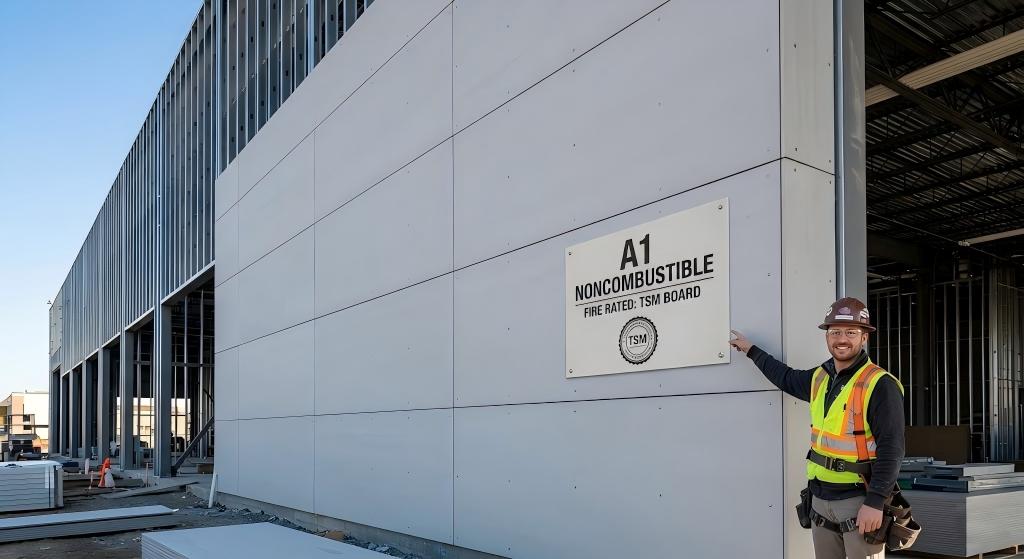
The primary advantage of a premium heat resistant cement board is its absolute immunity to fire. Manufactured from a highly compressed matrix of Portland cement, fine silica sand, and reinforcing fiberglass mesh, these boards contain zero organic compounds or combustible resins. Consequently, they achieve a Class A1 non-combustible rating under strict international testing standards (such as EN 13501-1). They will not ignite, they will not melt, and they will not release toxic volatile organic compounds (VOCs) when exposed to extreme temperatures.
Thermal Insulation and Heat Dissipation
Unlike solid metal panels that conduct heat rapidly, engineered cement boards possess a relatively low thermal conductivity (k-value). They act as a highly effective thermal break. When intense radiant heat from a commercial range hits the surface tile, the cement board substrate absorbs and dissipates that thermal energy horizontally across its mass, rather than transferring it straight through to the vulnerable wooden studs. This vital characteristic completely halts the dangerous process of pyrolysis within the wall cavity.
Immunity to Thermal Shock
Kitchens frequently experience ‘thermal shock’—rapid fluctuations between extreme heat and sudden cooling (such as boiling water splashing onto a cool surface). Standard substrates expand and contract violently under these conditions, which shears the rigid mortar holding the tiles in place. Conversely, a high-quality high temperature wall board maintains absolute dimensional stability. It does not warp or flex, thereby guaranteeing that delicate glass mosaics and intricate grout lines remain permanently flawless.
Comparison Table: Analyzing Kitchen Substrates
Contractors often debate which substrate provides the best return on investment for kitchen renovations. The following table objectively compares advanced cement boards against traditional MDF and Moisture-Resistant (Green) Drywall across critical kitchen performance metrics.
| Performance Metric | TSM Cement Board | MDF (Medium-Density Fiberboard) | Green Drywall (Moisture Resistant) |
| Fire Safety Rating | Class A1 (Completely Noncombustible) | Highly Combustible (Contains glues/resins) | Limited Combustible (Paper facing burns) |
| Heat Transfer Resistance | High (Acts as a thermal break to protect studs) | Low (Combusts under sustained heat) | Low (Gypsum degrades under high heat) |
| Moisture Resistance | Excellent (Inert, does not swell when wet) | Poor (Swells permanently when exposed to steam) | Moderate (Resists brief humidity, fails under water) |
| Load Capacity for Heavy Stone | Extreme (Rigid support for 3cm granite) | Moderate (Bows under prolonged heavy loads) | Negligible (Crushes under point loads) |
| Mold & Mildew Resistance | 100% Inorganic (Zero food source for mold) | Low (Organic fibers feed fungal growth) | Moderate (Paper facing eventually feeds mold) |
Designing the Ultimate Kitchen: Step-by-Step Applications
Possessing the right material is merely the first step; executing a flawless installation ensures the longevity of the kitchen. Professional contractors must adhere strictly to structural engineering protocols when applying these boards.
Constructing an Indestructible Countertop Substrate
Modern kitchen designs heavily favor massive slabs of 3cm granite, quartz, or poured concrete. These materials exert tremendous dead load (static weight) on the cabinetry. Using plywood or MDF as a countertop substrate is a severe mistake, as wood naturally bows over time, which eventually causes the rigid stone slab above to fracture. To install properly, contractors must lay a 1/2-inch or 3/4-inch cement board directly over the base cabinets or steel support framing. Fasten the board securely using corrosion-resistant screws. This provides an absolutely flat, unyielding base that distributes the massive weight of the stone evenly, preventing stress fractures permanently.
Engineering a Safe Backsplash Assembly
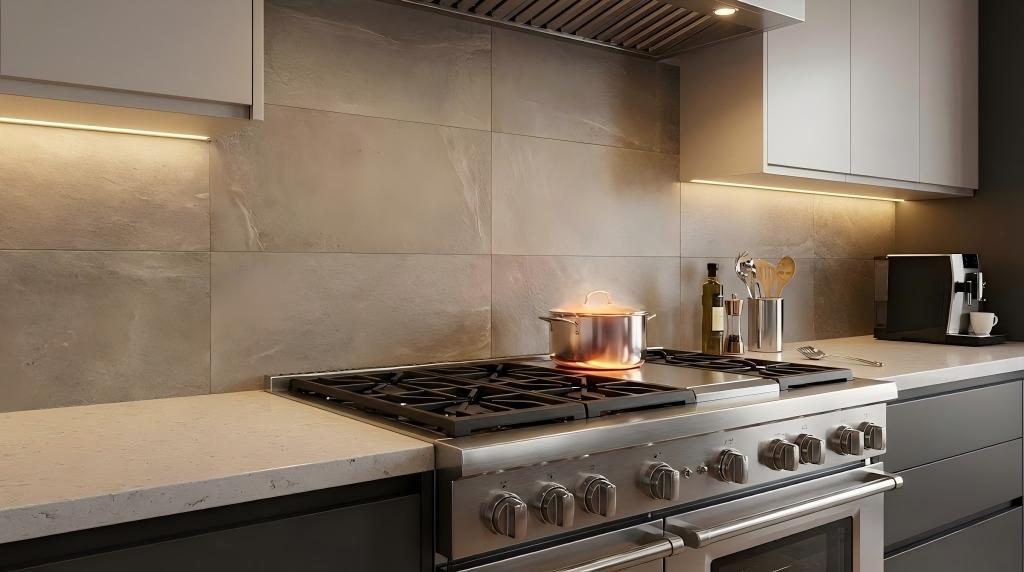
When installing a stove surround materials assembly, builders must remove any existing drywall down to the bare studs directly behind the cooking zone. Next, attach a 1/2-inch cement board to the wall studs. Apply alkali-resistant fiberglass mesh tape to all seams and embed the tape with a high-quality, polymer-modified thin-set mortar. Finally, trowel the thin-set directly onto the rough side of the cement board and firmly press your decorative tiles into place. This completely non-combustible assembly guarantees that radiant heat from the burners will never compromise the internal wall structure.
FAQ: 6 Key Questions for Kitchen Renovators
1. What is the precise maximum temperature the board can withstand?
High-quality Portland cement boards maintain their structural integrity at sustained temperatures exceeding 800°C (1472°F). While they are not classified as refractory bricks for the inside of a furnace, they vastly exceed the thermal requirements for any residential or commercial kitchen wall environment, providing a massive safety margin against radiant heat.
2. Can I use it directly behind a commercial-grade gas range?
Yes, absolutely. Commercial gas ranges pump out significantly more BTUs than standard residential ovens. Building codes typically require specific clearances to combustible surfaces. By replacing drywall with non-combustible cement board, you easily satisfy strict fire codes and create a permanent thermal shield behind the heavy-duty appliance.
3. Is it strictly necessary to use it under a granite countertop?
Yes, if you want a lifetime guarantee against cracking. Granite is incredibly heavy but has very low tensile strength; it cracks easily if the surface beneath it bends. Cement board provides extreme rigidity and eliminates the deflection that occurs when standard plywood or MDF substrates inevitably warp under heavy loads or kitchen moisture.
4. How do I seal the cement board against cooking grease and moisture?
While the board is moisture-resistant, it is porous. However, the sealing occurs at the finish layer. You must install a decorative surface, such as glazed ceramic tile or a stainless steel panel, over the board. You then seal the grout lines with a high-grade penetrating sealer. The combination of the sealed finish and the inert cement board creates a perfectly hygienic, grease-proof barrier.
5. Does installing cement board add too much thickness to the kitchen wall?
No. Cement boards are manufactured in standard building thicknesses. You simply remove the existing 1/2-inch drywall behind the stove and replace it with a 1/2-inch cement board. The wall remains perfectly flush, allowing your cabinets and surrounding finishes to align seamlessly without any awkward transitions.
6. Is the material chemically safe for food preparation environments?
Yes. Premium cement boards are manufactured without formaldehyde, asbestos, or hazardous volatile organic compounds (VOCs). Because they are completely inert and do not off-gas toxic chemicals even when heated, they easily meet all environmental safety standards for residential and commercial food preparation zones.
Conclusion: Never Compromise on Kitchen Safety
The kitchen remains the most vital, highly trafficked, and heavily utilized room in any building. Therefore, cutting corners on hidden structural substrates is a dangerous gamble that compromises both the aesthetic longevity of the renovation and the physical safety of the occupants.
By mandating the use of an engineered heat resistant cement board, architects and contractors permanently eliminate the threats of pyrolysis, thermal expansion, and moisture degradation. Do not leave the structural integrity of your high-end surfaces to chance. Protect your clients and your craftsmanship by exploring our comprehensive range of advanced kitchen substrates today.