Skip to content
Introduction: The Architectural Imperative of Life Safety
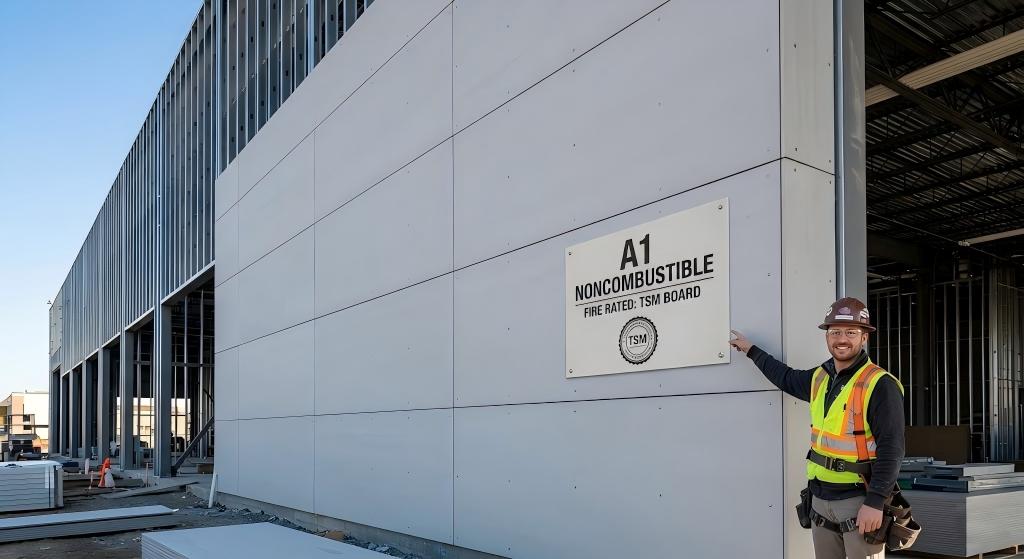
In modern commercial and residential construction, structural fires and hidden moisture degradation represent the two most catastrophic threats to architectural integrity and human life. When architects design the structural envelope of a high-density building, specifying a premium fire rated cement board is the most critical life-safety decision they can execute. Historically, contractors heavily relied on standard paper-faced gypsum drywall or highly combustible plywood sheathing to close interior wall cavities. However, building science and thermodynamic analysis prove that these organic substrates fail disastrously under extreme environmental stress.
When exposed to chronic humidity, traditional boards quickly succumb to water rot and toxic black mold. More devastatingly, when a structural fire breaks out, standard building materials actively contribute to the disaster. Plywood undergoes rapid pyrolysis, serving as a massive fuel source that accelerates flame spread. Standard gypsum drywall contains chemically bound water; while it offers brief fire resistance as the water turns to steam, the core eventually calcines, shrinks, and crumbles, allowing the fire to breach the wall cavity and collapse the structural framing.
Therefore, modern building code compliance mandates a fundamental shift in material specification. By eliminating organic substrates and transitioning to universally certified, advanced cementitious panels, structural engineers construct impenetrable defensive perimeters. In this comprehensive technical guide, we will dissect the strict physics of the A1 noncombustibility standard, analyze the exact metallurgical composition of asbestos-free Portland cement panels, and outline the rigorous installation protocols required to guarantee permanent structural survival.
Core Physics & Material Advantages
To comprehend why advanced cementitious panels survive sustained infernos that melt structural steel, we must examine the specific inorganic chemistry and thermodynamic properties of the material. True noncombustibility is a matter of molecular physics, not surface coatings.
The Inorganic Portland Cement Matrix
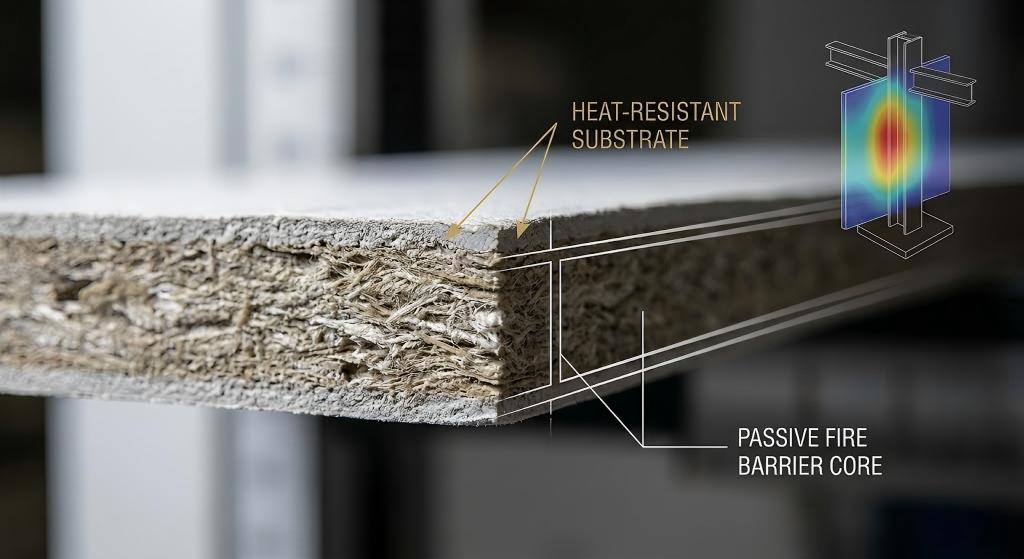
Manufacturers formulate a premium TSM cement board utilizing a highly compressed, homogenous matrix of Portland cement, fine silica sand, and reinforcing fiberglass mesh. Unlike traditional building panels that rely on combustible wood pulp, organic resins, or paper facings, these advanced boards are 100% inorganic. When subjected to the extreme temperatures of a flashover fire (often exceeding 800°C or 1472°F), the board simply cannot ignite because it contains absolutely zero carbon-based fuel. Consequently, the material completely halts the vertical and horizontal propagation of flames across a building’s interior.
Meeting the A1 Noncombustible Standard (EN 13501-1)
The European Standard EN 13501-1 represents the most rigorous ‘reaction to fire’ classification system globally. To achieve the elite Class A1 rating, a material must pass severe calorimetric testing. Engineers place the panel inside a highly calibrated furnace; during this exposure, the board must not ignite, must not sustain a flame, and crucially, must not release any measurable thermal energy (calorific value) that would contribute to the fire’s intensity. Furthermore, because these A1 noncombustible materials contain zero plastics or toxic adhesives, they achieve the highest sub-classifications for smoke production (s1) and flaming droplets (d0). They produce zero toxic smoke and zero melting debris, ensuring evacuation routes remain breathable and clear.
Asbestos-Free Tensile Reinforcement
In the past, the construction industry utilized hazardous asbestos fibers to provide tensile strength to high-temperature materials. Modern engineering has entirely eradicated this danger. Today, cutting-edge manufacturing facilities utilize continuous layers of alkali-resistant fiberglass mesh embedded deep within the cement matrix. This provides massive flexural and shear strength without introducing any respiratory carcinogens. The resulting board is completely environmentally inert, safe to cut on-site, and perfectly stable under extreme thermal shock.
Critical Applications & Real-World Use Cases
The immense structural rigidity and supreme thermodynamic stability of extruded cement panels allow contractors to deploy them across the most demanding, high-risk architectural zones. Engineers utilize these substrates wherever absolute compartmentalization is required.
High-Rise Elevator Shafts and Escape Corridors
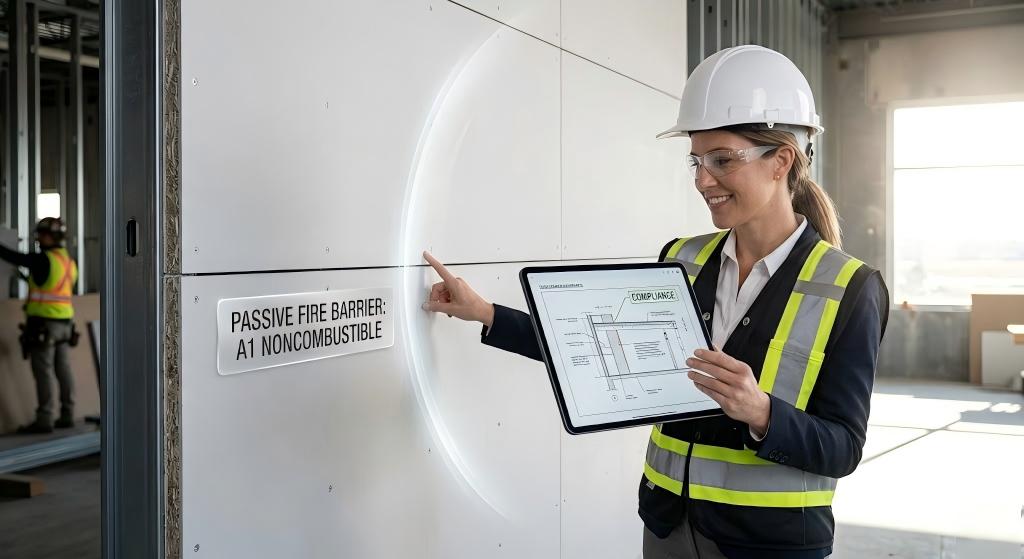
Elevator shafts and central stairwells serve as the respiratory system of a high-rise building. During a fire, these vertical shafts act as massive chimneys, rapidly drawing toxic smoke and extreme heat upward to higher floors. Consequently, municipal building codes strictly mandate that contractors construct these vertical corridors using unyielding passive fire protection assemblies. Installers screw heavy-duty cement boards directly to heavy-gauge steel framing. Because the cement board will not warp, shrink, or disintegrate under sustained thermal stress, it maintains a continuous, airtight fire barrier that protects the primary evacuation routes for thousands of occupants.
Commercial Kitchens and Industrial Boiler Rooms
Inside massive commercial kitchens, high-output gas ranges generate intense, chronic radiant heat. If standard drywall sits behind these appliances, the continuous heat slowly lowers the ignition temperature of the internal wooden wall studs—a dangerous chemical degradation known as pyrolysis. Therefore, architects strictly specify a highly capable heat resistant substrate directly behind the cooking zones. The cement board absorbs the radiant energy and dissipates it safely, permanently eliminating the risk of a hidden wall cavity fire. Furthermore, industrial boiler rooms rely on these boards to line the walls and ceilings, preventing accidental equipment explosions from breaching adjacent occupied zones.
Exterior High-Rise Curtain Walls
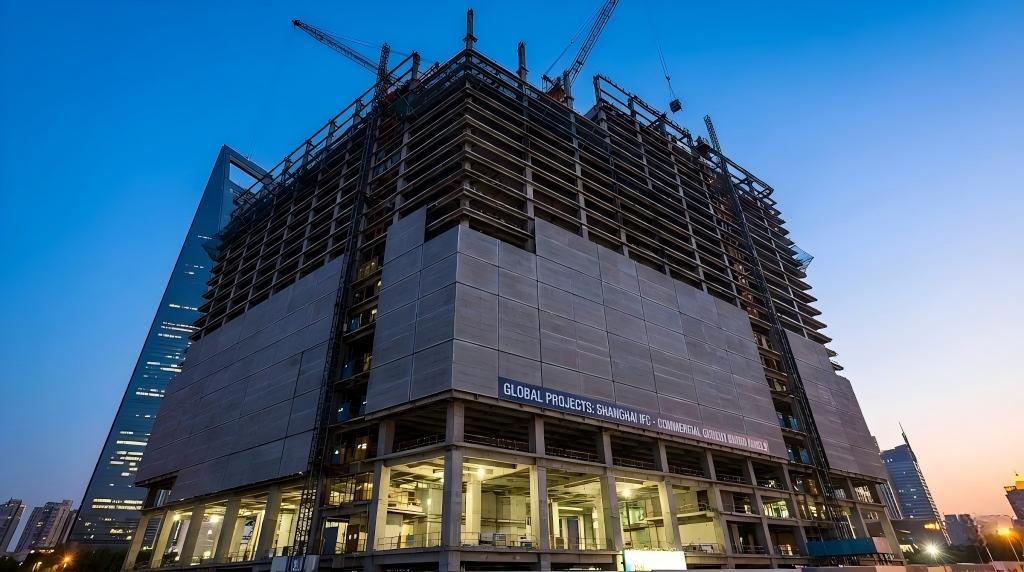
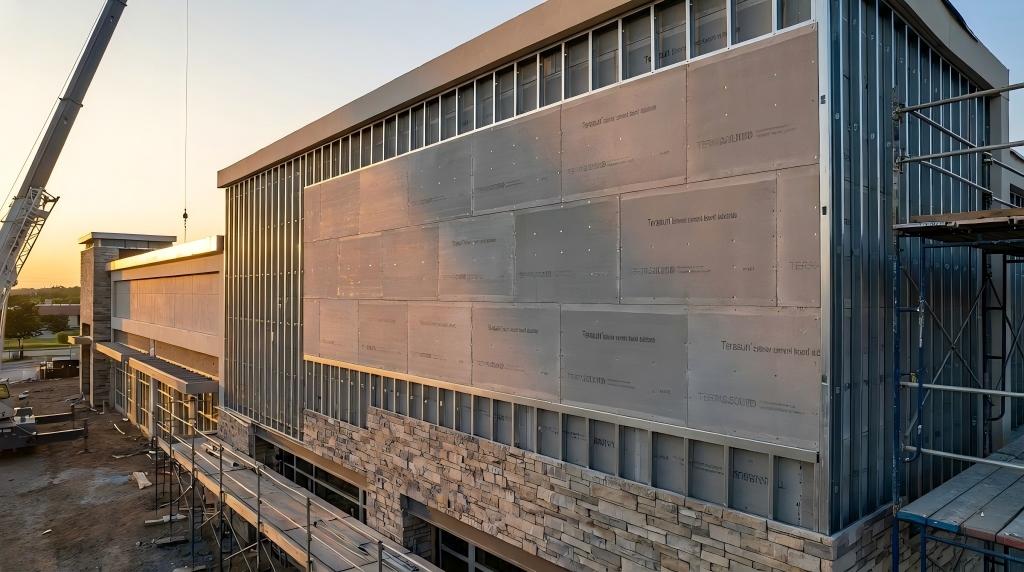
Recent global architectural tragedies have exposed the catastrophic danger of combustible exterior facades. When fire breaches a window, it rapidly travels up the exterior of a building if the sheathing is flammable. Subsequently, building authorities worldwide now ban combustible sheathing on structures exceeding specific height thresholds. By utilizing fireproof wall panels as the primary exterior sheathing substrate behind the final rainscreen or stucco finish, developers physically sever the path of the flames, protecting the multi-million-dollar structural envelope from exterior conflagration.
Comparison Table: Evaluating Fire-Rated Substrates
When engineering a fire-rated partition wall, architects must objectively evaluate the failure thresholds of various building materials. The following table mathematically contrasts advanced cement boards against traditional Type X Drywall, Plywood, and MDF across critical performance metrics.
| Substrate Material | Combustibility & Fire Rating | Structural Integrity Under Fire | Moisture / Water Resilience | Toxic Smoke Contribution |
| TSM Cement Board | Class A1 (100% Noncombustible) | Maintains rigid shape; zero shrinkage. | Excellent (Unaffected by fire hoses). | Absolute Zero. |
| Type X Fire Drywall | Limited Combustibility (Paper burns). | Calcines and eventually crumbles. | Very Poor (Disintegrates when wet). | Low, but paper yields smoke. |
| Standard Plywood | Highly Combustible (Class D/E). | Chars rapidly, loses all load capacity. | Poor (Delaminates under stress). | Extremely High (Lethal CO). |
| MDF (Fiberboard) | Highly Combustible. | Burns quickly due to resin content. | Terrible (Swells and dissolves). | High (Releases toxic VOCs). |
As the physical data explicitly demonstrates, traditional organic building materials actively fuel structural collapse. For uncompromising life safety and asset protection, utilizing a truly inorganic, A1-rated cement panel is the only scientifically sound engineering decision.
Installation Best Practices & Engineering Specs
Procuring a Class A1 substrate is merely the first phase; executing a flawless installation dictates the ultimate success of the fire-rated assembly. Contractors must strictly adhere to structural engineering protocols to ensure the wall maintains its integrity during violent thermal expansion and hose-stream impact.
Steel Framing and Deflection Tolerances
For a true fire-rated partition wall, structural engineers mandate the use of light-gauge or heavy-gauge galvanized steel studs rather than combustible wood framing. The steel studs must be spaced no more than 16 inches on center (O.C.) to provide rigid support. During a fire, building materials expand rapidly. Therefore, the steel framing assembly often incorporates ‘slip track’ deflection channels at the ceiling joint to absorb the structural movement without crushing the rigid cement boards.
Precision Fastening Protocols
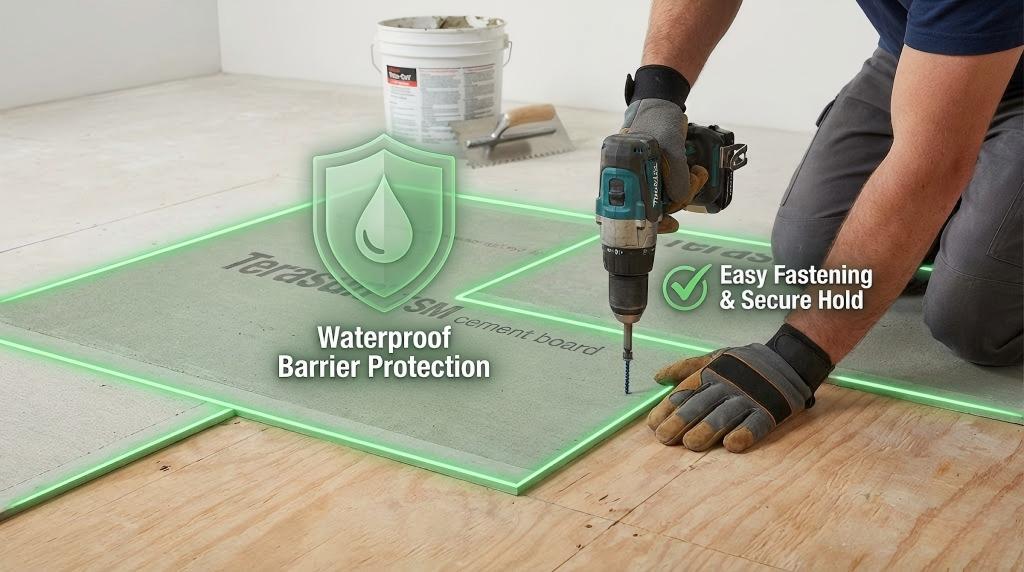
Installers must never use standard drywall screws to hang cement board in a fire-rated assembly. Standard screws will melt or snap under extreme thermal shear stress. Contractors must utilize specialized, alkali-resistant, ceramic-coated, self-drilling cement board screws. These fasteners must be driven perfectly flush with the surface of the board and spaced precisely every 8 inches along the perimeter and internal studs. Over-driving the screws can fracture the fiberglass mesh, critically weakening the board’s hold on the steel frame.
Fire-Stopping Joint Treatment
A fire wall is only as strong as its seams. To prevent flames and superheated toxic gases from penetrating the gaps between the panels, the joints must be treated meticulously. Installers must offset (stagger) the joints on opposite sides of the wall cavity so that no two seams align perfectly. Subsequently, contractors must fill all gaps with an intumescent fire-stopping acoustic sealant or a specialized high-temperature refractory mortar embedded with alkali-resistant fiberglass mesh tape. This creates a permanent, monolithic Product Details assembly that entirely blocks smoke migration.
FAQ: 6 Technical Questions for Architects and Contractors
1. What are the exact manufacturing dimensional tolerances of the board?
Premium cement boards are produced under extreme ISO 9001 quality control protocols. The standard thickness tolerance is rigorously held to +/- 0.5mm, while the length and width dimensions are calibrated to +/- 2.0mm. This precision guarantees that the boards align perfectly flush on steel studs, preventing smoke-leaking gaps and ensuring a mathematically precise installation.
2. How do contractors cut this high-density board on the job site?
Because the board features a highly compressed Portland cement and silica matrix, standard drywall utility knives cannot cut it. Contractors must utilize a circular saw or an angle grinder equipped with a specialized continuous-rim diamond blade. Due to the silica content, operators must strictly utilize OSHA-compliant HEPA dust extraction vacuums and wear N95 particulate respirators during all cutting operations.
3. Does the board comply with North American ASTM E136 standards?
Yes. In addition to mastering the European EN 13501-1 (A1) classification, high-quality cement boards are rigorously tested against the North American ASTM E136 standard for the behavior of materials in a vertical tube furnace at 750°C. Passing this standard universally qualifies the board as an approved noncombustible building material across all major global building codes.
4. Can this board be safely installed directly behind a heavy commercial gas stove?
Absolutely. Commercial gas ranges pump out massive British Thermal Units (BTUs). Building codes require specific noncombustible clearances around these appliances. By replacing standard drywall with a 1/2-inch cement board directly against the wall studs, contractors create a permanent thermal break that easily satisfies strict fire marshal codes and protects the hidden wall cavity.
5. Will the cement board warp, bend, or expand under extreme heat?
No. One of the primary engineering advantages of an inorganic cement matrix is its profound dimensional stability. Unlike steel, which bends under high heat, or wood, which twists as it dries out, the cement board maintains its exact physical geometry. It boasts an incredibly low coefficient of thermal expansion, preventing the wall assembly from tearing itself apart during a fire event.
6. Can the board be painted or plastered directly for interior finish work?
Yes. While it is frequently used as a hidden substrate for tile or heavy stone veneer, it can serve as a finished wall. Installers must tape the joints, apply a skim coat of compatible cementitious setting compound to achieve a Level 4 finish, and finally seal the highly alkaline surface using a specialized masonry primer before applying any exterior-grade acrylic or elastomeric paint.
Conclusion: Engineering Permanent Structural Security
Ultimately, the physical survival of a multi-million-dollar commercial facility—and the human lives inside it—depends entirely on the metallurgical and chemical integrity of its hidden wall substrates. Attempting to reduce upfront construction capital by utilizing highly vulnerable, combustible drywall in critical infrastructure zones guarantees catastrophic failure during a fire emergency.
By mandating the use of a true fire rated cement board, architects and structural engineers establish an unyielding, A1-certified defensive perimeter against extreme thermal destruction. Do not compromise the legal compliance or physical security of your next major development. Secure your high-rise enclosures and commercial partitions with industry-leading noncombustible materials. Explore our comprehensive testing certifications, request physical samples, and Contact Us directly at TSM Cement Board today to build your next project with absolute certainty.