Skip to content
In the anatomy of a building, the floor is the workhorse. It must bear the static load of furniture, the dynamic load of foot traffic, and the dead load of the structure itself. For decades, builders relied on plywood or Oriented Strand Board (OSB) as the primary subfloor material. While cheap and lightweight, these wood-based products suffer from three fatal flaws: they rot when wet, they delaminate under stress, and they squeak as they age.fiber cement flooring.
Modern construction—particularly in modular housing, industrial mezzanines, and wet areas—demands a substrate that is dimensionally stable and structurally inert. Enter
This guide explores why TSM’s high-density compressed cement board (density > 1.6 g/cm³) is rapidly replacing wood and poured concrete in demanding flooring applications. We will examine the physics of deflection, acoustic damping properties, and the installation protocols for a floor that feels as solid as rock.
The Physics of Deflection: Why Tiles Crack
The greatest enemy of a tiled floor is deflection (bending). Natural stone, porcelain, and ceramic tiles are rigid and brittle. If the subfloor beneath them flexes even a fraction of a millimeter when walked upon, the adhesive bond breaks, or the tile snaps.
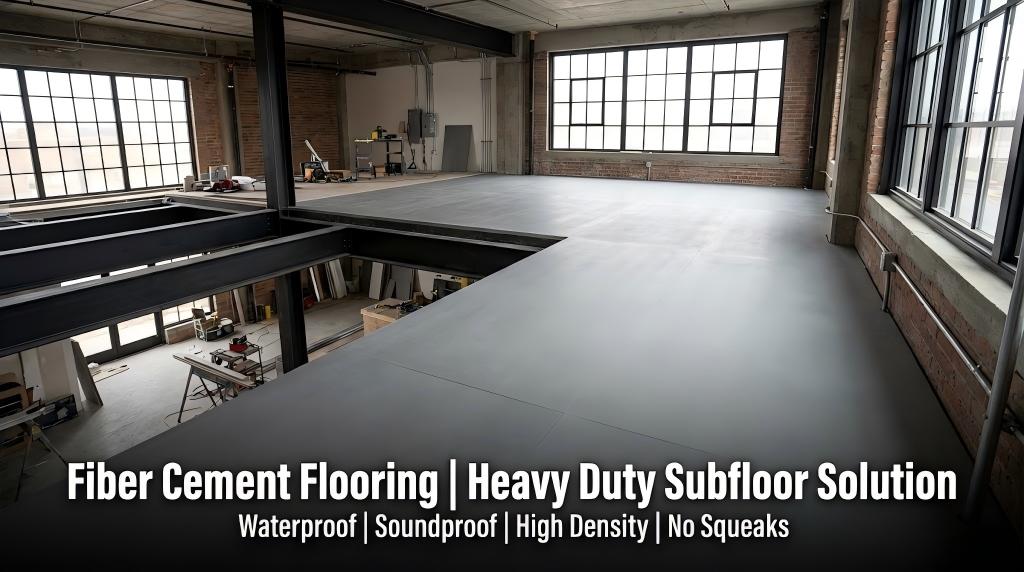
Plywood has a low Modulus of Elasticity. It bends easily. To make it rigid enough for large-format tiles, you often need to install two layers, raising the floor height significantly. TSM Fiber Cement Flooring has an exceptionally high Modulus of Elasticity. A single 18mm or 20mm sheet provides a monolithic, non-deflecting surface.
This rigidity is achieved through the ‘Heavy Press’ manufacturing process. Unlike standard wall boards, TSM flooring boards are compressed under thousands of tons of pressure before curing, creating a heavy duty cement board that virtually eliminates the ‘bounce’ associated with timber framed floors.
The Wet Area Advantage: Immune to Rot
In bathrooms, kitchens, and laundry rooms, water leaks are a matter of ‘when,’ not ‘if.’ When water penetrates below the finished floor, plywood acts like a sponge. It swells, pushes up the tiles, and rots, often compromising the structural joists below.
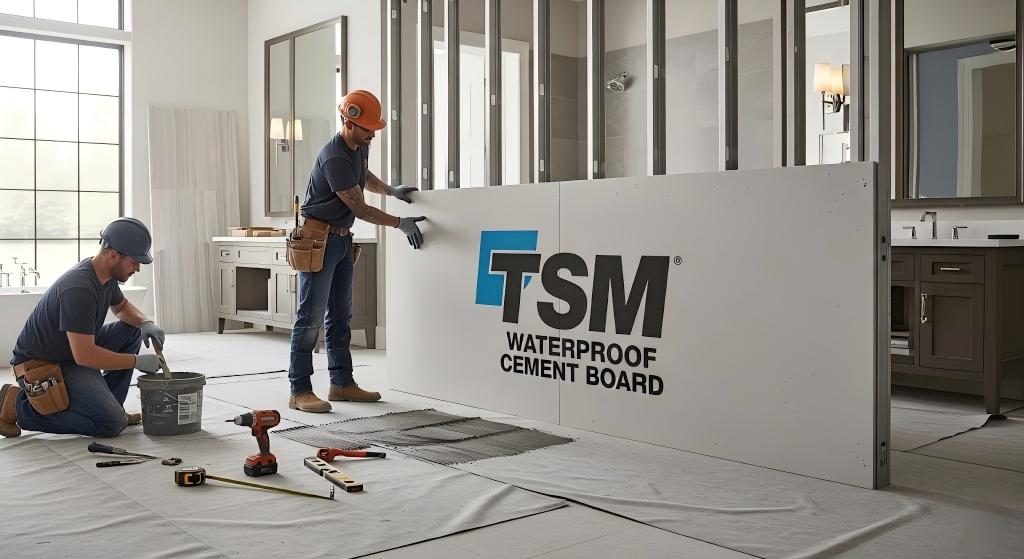
TSM Fiber Cement is a waterproof subfloor solution. It is inorganic. It does not swell, and it does not rot. Even if a pipe bursts and floods the floor for days, the TSM board will maintain its structural integrity once dried. This makes it the standard specification for pod bathrooms and modular container homes where long-term durability is essential.
Acoustics: The Silent Step
One of the most common complaints in multi-story timber buildings is impact noise—the sound of footsteps traveling to the room below. Wood acts as a drum skin, amplifying these vibrations.
Mass is the antidote to noise. TSM flooring boards are dense (approx. 30kg per square meter for 20mm thickness). This thermal and physical mass helps to dampen vibration energy. When combined with an acoustic rubber mat, a fiber cement floor can achieve superior Impact Insulation Class (IIC) ratings, making it ideal for hotels and apartment complexes.
Critical Applications: Beyond the Bathroom
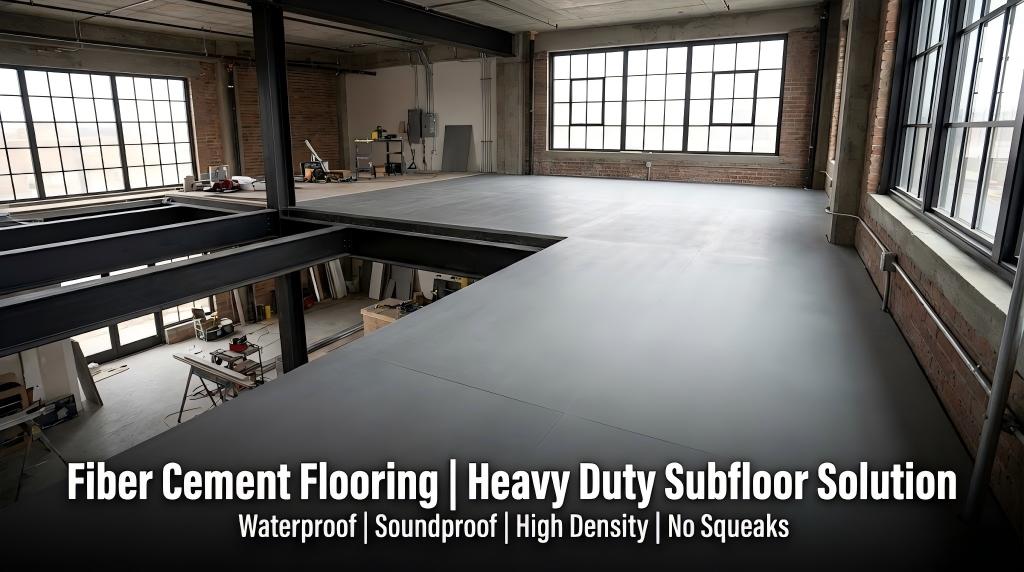
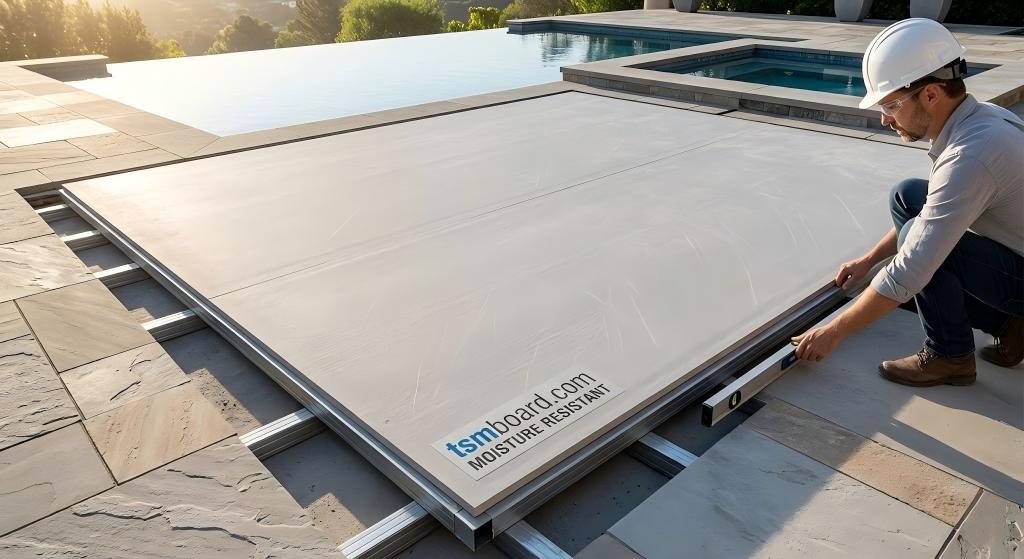
1. Mezzanine Floors: In warehouses and retail spaces, mezzanines are built with steel joists. TSM high-strength boards span these joists directly, creating a fire-proof, load-bearing deck that can support racking and heavy foot traffic.
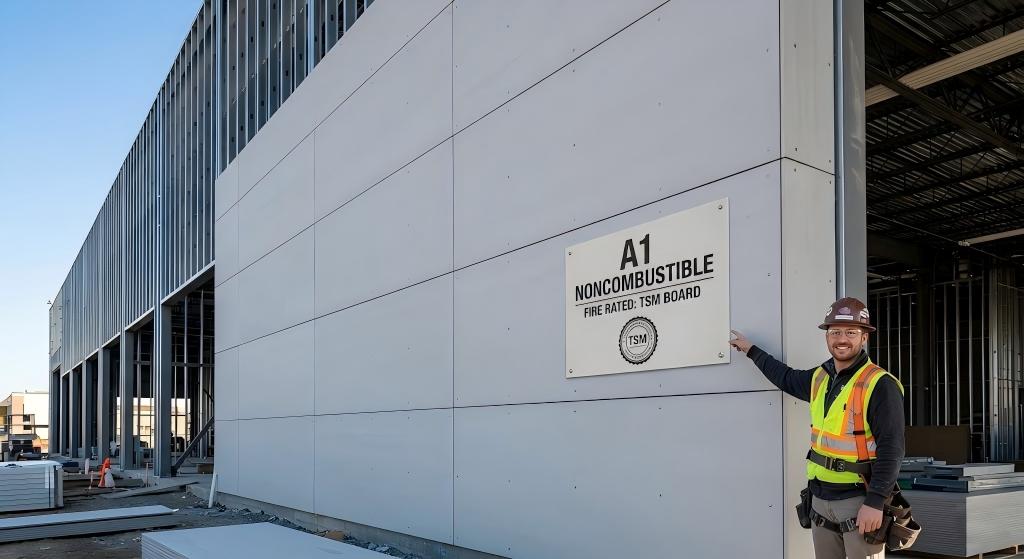
2. Loft Conversions: When converting an attic, weight and height are concerns. A mezzanine flooring sheet offers a thin profile (saving headroom) with high strength, and it’s non-combustible nature aids in meeting fire codes for the new habitable space.
3. Modular & Container Homes: Shipping container floors are often treated with toxic pesticides. Replacing them with fiber cement provides a clean, safe, and rot-proof base for the home.
Installation Protocol: Securing the Deck
Installing high-density flooring requires specific techniques to ensure longevity.
• Support Spacing: Joists should typically be spaced at 400mm or 600mm centers, depending on the board thickness (15mm vs 24mm) and the intended live load.
• Gluing: We strongly recommend applying a bead of structural construction adhesive to the top of the joist before laying the board. This prevents microscopic movement that causes squeaks.
• Screwing: Use self-embedding wing-tipped screws designed for fiber cement. These screws ream a hole in the board and then snap off the wings as they enter the steel/wood joist, clamping the board tightly without cracking it.
FAQ: Flooring Specifications
Q: Can I install underfloor heating?
A: Yes. Fiber cement is thermally conductive. It transfers heat efficiently from the heating cables to the room, unlike wood which acts as an insulator. It is an excellent thermal mass for radiant heating systems.
Q: Do I need to seal it?
A: If you are using it as a raw, industrial finish floor (which is a popular modern aesthetic), yes, you should seal it with a clear concrete sealer to prevent staining. If used as a subfloor for tile or carpet, sealing is not required.
Conclusion: A Foundation You Can Trust
A floor is only as good as its substrate. By choosing TSM Fiber Cement Flooring, you are eliminating the risks of rot, fire, and squeaks forever.
Build your project on solid ground. Download our Flooring Board Specs or review the complete Installation Guide to start your build correctly.