Skip to content
Introduction: The Physics of the Building Envelope

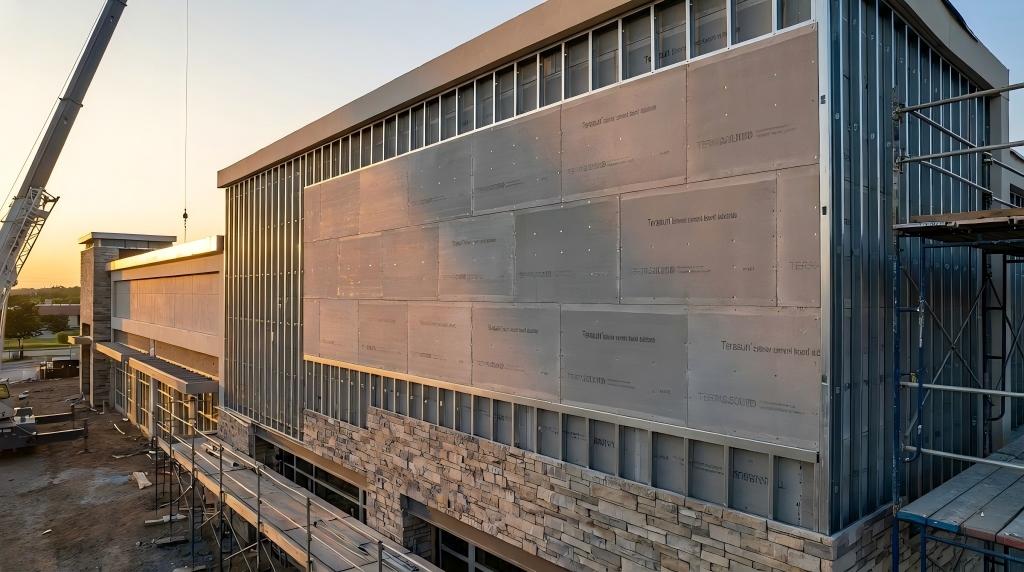
Specifying a reliable exterior cement board substrate is the most foundational decision an architect makes when designing a modern building envelope. In commercial construction, the facade represents the first line of defense against severe environmental forces. Consequently, the materials hidden directly beneath the decorative finish must perform flawlessly under immense physical and atmospheric stress. Architects cannot afford to specify materials based on guesswork; they require hard engineering data.
Historically, builders utilized wood-based panels like oriented strand board (OSB) or exterior-grade plywood for exterior sheathing. However, building science has rapidly evolved. We now understand that organic materials fail predictably when subjected to moisture intrusion, thermal bridging, and structural shear forces over decades. Therefore, the commercial construction industry has decisively shifted toward advanced, inorganic cementitious panels.
By bridging the critical gap between the structural steel framing and the final architectural finish, these engineered panels ensure absolute longevity. In this comprehensive technical analysis, we will deconstruct the specific structural demands placed upon commercial building facades, compare material compatibility, and outline the strict installation protocols required to execute a high-performance building skin.
The Critical Role of an Exterior Substrate

To understand why architects mandate specific materials, we must analyze the exact function of exterior sheathing. The substrate is not merely a blank canvas for applying paint or brick; it is a vital, load-bearing component of the wall assembly.
Managing Dead Loads and Wind Loads
Architectural claddings—such as natural stone veneer, manufactured masonry, and heavy-gauge metal panels—carry significant ‘dead load’ (static weight). The substrate must safely transfer this dead load back to the primary steel framing. Furthermore, high-rise buildings face extreme positive and negative wind pressures. A rigid exterior cement board substrate effectively resists these lateral wind loads, preventing the walls from flexing. If a wall flexes excessively (failing to meet strict deflection criteria like L/360), the rigid mortar holding the exterior masonry will immediately crack, leading to catastrophic system failure.
Creating a Continuous Insulation Plane
Modern energy codes demand continuous exterior insulation to prevent thermal bridging through metal studs. The cement board acts as the rigid, unyielding face over which contractors apply weather-resistant barriers (WRB) and rigid foam insulation. Because the board maintains absolute dimensional stability, it prevents the microscopic movement that tears building wraps and compromises the building’s airtightness.
4 Structural Reasons to Specify TSM for Facades
Why do structural engineers consistently override standard drywall and OSB in favor of advanced fiber-reinforced cement? The decision rests on four quantifiable physical properties.
1. Extreme Impact and Wind Debris Resistance
Coastal commercial buildings must survive hurricane-force winds and flying debris. Standard exterior gypsum sheathing punctures easily upon impact. In stark contrast, fiber-reinforced cement panels offer exceptional shear strength and impact resistance. They frequently pass stringent missile-impact tests, proving they are legitimate wind resistant wall panels capable of protecting the interior structure during severe weather events.
2. Superior Moisture Barrier Physics
Moisture inevitably penetrates the exterior cladding through mortar joints or sealant failures. When water hits an organic OSB panel, capillary action draws the moisture deep into the wood fibers, causing immediate swelling and eventual rot. Conversely, cement boards are highly moisture-resistant and completely inorganic. They do not swell, warp, or deteriorate when wet. Additionally, they remain vapor-permeable, allowing any trapped moisture vapor within the wall cavity to safely breathe outward rather than condensing inside the insulation.
3. Zero Risk of Delamination
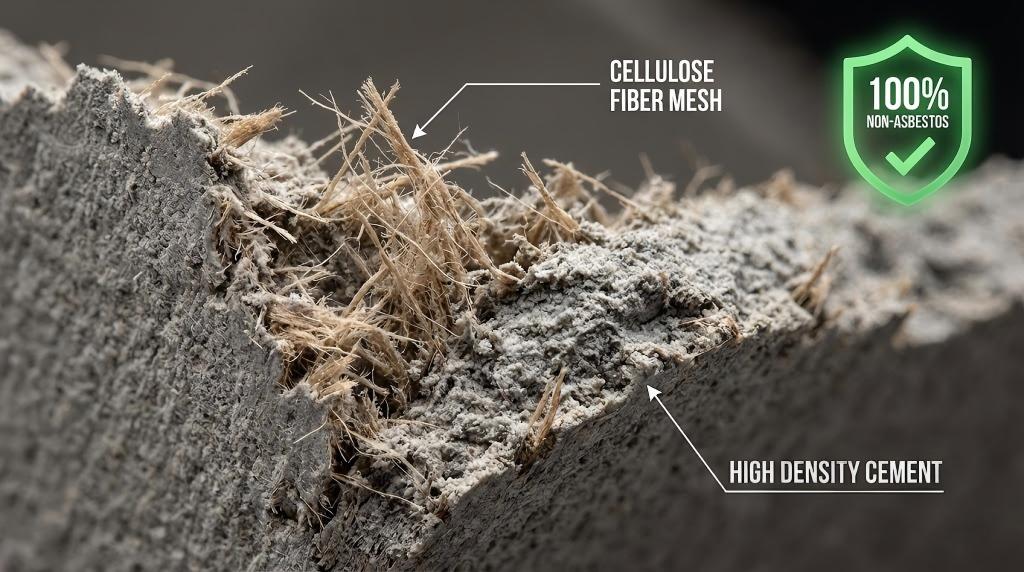
Plywood and OSB rely on chemical glues to bind their wood layers together. Over time, UV exposure, heat, and moisture chemically break down these adhesives, causing the layers to peel apart (delaminate). Cement board utilizes a monolithic matrix of Portland cement and embedded fiberglass mesh. Because it contains no glues to degrade, delamination is physically impossible, ensuring a permanent bond for exterior claddings.
4. Strict Fire Code Compliance (NFPA 285)
Commercial high-rise construction faces rigorous fire safety regulations. Materials must prevent the vertical spread of fire across the facade. High-quality cement boards achieve an A1 noncombustible rating. Because they add absolutely zero fuel to a fire, architects use them to reliably design complex, multi-layer wall assemblies that confidently pass the demanding NFPA 285 exterior fire propagation tests.
Compatibility Comparison: Finishes and Substrates
Different architectural finishes impose entirely different chemical and mechanical demands on their backing materials. The following table objectively analyzes how advanced cement boards perform against traditional OSB and Exterior Gypsum.
| Architectural Finish | Cement Board | OSB / Plywood | Exterior Gypsum |
| Traditional Stucco | Excellent (Direct application possible; highly compatible alkaline base) | Poor (Requires extensive metal lath and multiple moisture barriers) | Moderate (Requires lath; paper facing degrades when wet) |
| Brick & Stone Veneer | Excellent (High load-bearing capacity; no deflection under heavy weight) | Poor (Flexes under weight, causing mortar shear and dropped stones) | Poor (Cannot support heavy dead loads directly) |
| Metal Panel Systems | Excellent (Provides rigid, flat backing for Z-girts and extrusions) | Moderate (Prone to dimensional changes that warp metal panels) | Moderate (Low screw pull-out strength for heavy rails) |
| EIFS (Exterior Insulation) | Excellent (Perfect adhesion surface for polymer base coats) | Moderate (Requires specific primers; risks swelling behind foam) | Excellent (Standard industry application) |
As the engineering data demonstrates, utilizing a dedicated exterior cladding support system eliminates the chemical and mechanical incompatibilities associated with wood and paper-faced gypsum, thereby ensuring the permanent integrity of the facade.
Best Practices for Commercial Installation
Even the most advanced building materials will fail if contractors execute the installation poorly. Commercial facades require strict adherence to structural fastening and weatherproofing protocols.
1. Structural Framing and Spacing
For commercial applications carrying heavy claddings like brick veneer, the underlying steel studs must be spaced a maximum of 16 inches on center (16″ o.c.). Using 24″ spacing introduces unacceptable deflection. The framing must be structurally engineered to meet a minimum deflection criteria of L/360 for standard finishes, or L/720 for brittle masonry finishes.
2. Fastening Schedules and Hardware
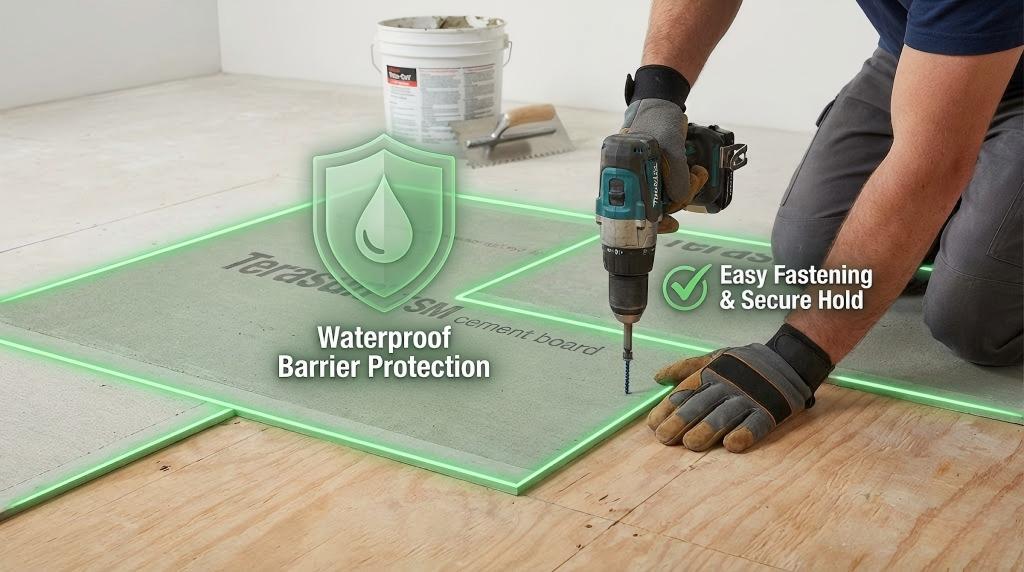
Contractors must never use standard drywall screws. The alkaline nature of Portland cement rapidly corrodes standard steel. Installers must use specialized ceramic-coated or stainless steel, self-drilling screws. Fasten the panels every 8 inches along the edges and every 12 inches within the field of the board. Ensure the screw heads sit flush; over-driving shatters the fiberglass mesh and drastically reduces holding power.
3. Addressing Thermal Expansion (Control Joints)
Although highly stable, large expanses of cement board will undergo minimal thermal expansion. When installing it as a stucco backing board, contractors must leave a 1/8-inch gap between panel edges. Furthermore, true vertical control joints (expansion joints) must be integrated into the framing and cladding system every 16 to 20 linear feet to safely absorb building movement without cracking the facade.
4. Integrating the Weather-Resistant Barrier (WRB)
While the board does not degrade in water, it is porous. Therefore, a complete Weather-Resistant Barrier (WRB) is mandatory. Contractors can apply traditional building wraps (like Tyvek) over the board, or increasingly, they utilize fluid-applied air and water barriers directly onto the cement board surface. The cement board’s monolithic surface accepts these fluid-applied membranes flawlessly, creating an airtight commercial envelope.
FAQ: 6 Crucial Questions for Contractors
1. Is cement board structurally better than exterior plywood for walls?
Yes, from a durability and fire safety perspective. While plywood may offer slightly higher initial shear strength for racking, it is highly combustible and rapidly loses all structural integrity when exposed to moisture. Cement board provides permanent dimensional stability, zero rot, and total non-combustibility.
2. What is the fire rating of exterior cement boards?
High-quality commercial boards are classified as A1 Noncombustible. They do not ignite, spread flames, or contribute fuel to a fire. This makes them ideal components for achieving 1-hour and 2-hour fire-rated exterior wall assemblies required by commercial building codes.
3. Do I still need a Weather-Resistant Barrier (WRB) behind the cladding? Absolutely. The cement board serves as the structural masonry veneer substrate, but it is not a waterproofing membrane. Building codes strictly mandate a continuous WRB (either sheet-applied or fluid-applied) over the substrate to prevent bulk water from reaching the steel framing and interior insulation.
4. How do you fasten it securely to heavy-gauge commercial steel studs?
You must use ribbed-head, self-drilling screws specifically designed for dense cementitious materials and heavy-gauge steel (usually #8 or #10 screws with a self-reaming tip). Standard sharp-point screws will not penetrate commercial 16-gauge or 18-gauge steel studs effectively.
5. Can the boards be left exposed to the elements during a long construction phase?
Yes. Unlike gypsum sheathing, which must be covered almost immediately to prevent the paper facing from dissolving, cement boards can be left exposed to rain and UV rays for several months during construction without suffering any structural degradation or dimensional warping.
6. What kind of mesh tape is required for finishing the exterior joints?
You must strictly use a heavy-duty, alkali-resistant fiberglass mesh tape (typically 2 inches or wider). Standard drywall paper tape or non-alkali-resistant mesh will chemically dissolve when embedded in the highly alkaline Portland cement mortars used for exterior joint treatment.
Conclusion: Engineering a Permanent Facade
Designing a commercial building facade requires a rigorous commitment to building science. By eliminating organic, vulnerable materials from the exterior wall assembly, architects dramatically reduce the long-term liability associated with moisture intrusion, structural deflection, and fire propagation.
Ultimately, specifying an advanced exterior cement board substrate guarantees that your decorative claddings will remain secure, pristine, and safe for the entire lifespan of the structure. Do not compromise the integrity of your next large-scale commercial project. Explore Terasun’s comprehensive range of exterior wall systems today and build with absolute confidence.