Skip to content
Introduction: The Urgent Shift to Sustainable Architecture

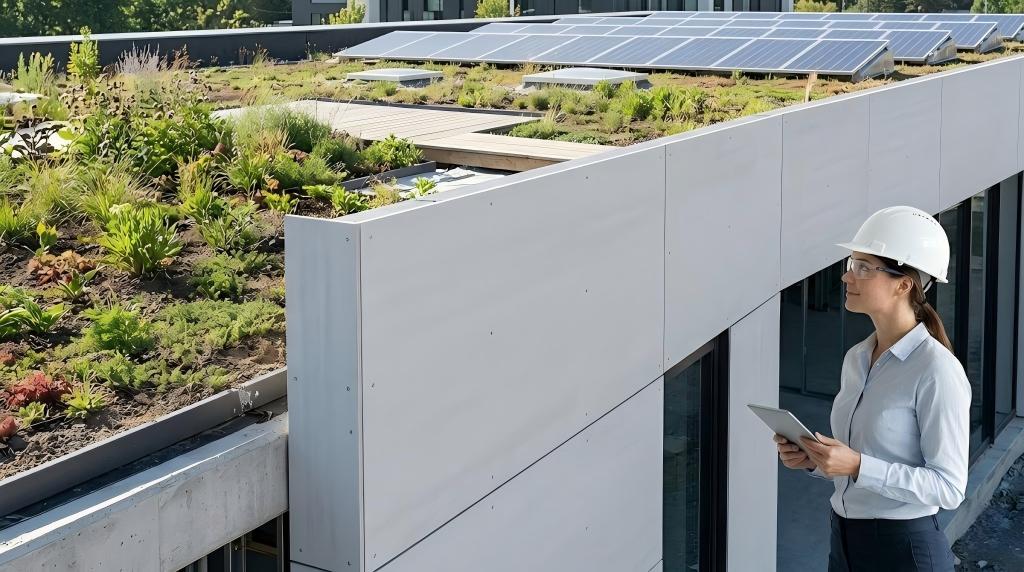
In the modern era of commercial and residential development, the construction industry faces immense pressure to eliminate toxic, disposable materials that actively harm the environment and degrade indoor air quality. Traditional architectural practices have long relied on vulnerable organic materials that succumb to devastating water rot, harbor toxic mold, and present catastrophic structural fire risks. To permanently mitigate these vulnerabilities while simultaneously adhering to strict environmental certifications, engineers are actively specifying eco-friendly fiber cement boards as the ultimate structural baseline.
Historically, builders utilized formaldehyde-soaked plywood, medium-density fiberboard (MDF), or standard paper-faced gypsum drywall to enclose interior and exterior wall cavities. However, building science reveals that these materials possess a tragically short lifecycle. When exposed to even minor hydrostatic pressure or ambient humidity, organic boards swell, delaminate, and require complete demolition and landfill disposal. Furthermore, in the event of a fire, these traditional substrates act as active fuel sources, releasing lethal chemical smoke into the atmosphere.
Consequently, transitioning to permanent, sustainable building materials is no longer an optional architectural trend; it is an engineering mandate driven by global building codes and LEED (Leadership in Energy and Environmental Design) standards. By integrating advanced, inorganic cementitious panels into the building envelope, developers establish a permanent, non-toxic barrier that drastically lowers a building’s overall environmental footprint. In this comprehensive technical guide, we will dissect the inorganic physics of these ecological substrates, analyze their critical role in high-performance green building applications, and outline the rigorous installation protocols required to maximize their structural and environmental potential.
Core Physics & Material Advantages

To fully comprehend how premium cement panels contribute to a greener planet while outperforming traditional building materials, we must rigorously deconstruct their specific molecular physics and chemical composition. Sustainable engineering demands materials that offer immense compressive strength alongside absolute ecological neutrality.
The Inorganic, Asbestos-Free Portland Matrix
Manufacturers formulate elite TSM cement boards utilizing a highly compressed, crystalline matrix of Type I Portland cement, high-purity silica sand, and water. Crucially, modern sustainable engineering has completely eradicated the historical reliance on hazardous asbestos fibers. Instead, cutting-edge facilities utilize continuous layers of safe, alkali-resistant fiberglass mesh embedded deep within the faces of the cement core. This creates a 100% asbestos free cement board that protects both the manufacturing workforce and the final building occupants from respiratory carcinogens. Because the board consists entirely of inorganic earth minerals, it requires zero toxic chemical treatments to resist biological decay.
Zero VOC Emissions and Indoor Air Quality (IAQ)
Indoor Air Quality (IAQ) represents a primary pillar of sustainable green building. Traditional wood-based panels (like OSB and MDF) rely heavily on synthetic urea-formaldehyde resins and glues to bind their wood fibers together. Over time, these panels continuously off-gas Volatile Organic Compounds (VOCs) into the tightly sealed environments of modern energy-efficient buildings, triggering Sick Building Syndrome and severe occupant health issues. Conversely, the dense Portland cement matrix utilizes a natural hydraulic curing process that requires absolutely no synthetic adhesives. Therefore, these low VOC wall panels achieve an absolute zero emission rate, ensuring pristine air quality in healthcare facilities, schools, and residential bedrooms.
End-of-Life Recyclability and Embodied Energy
A truly sustainable product must account for its end-of-life disposal. When water-damaged drywall or rotting plywood is ripped out of a building, it flows directly into municipal landfills, where it generates hazardous methane gas as it decomposes. In stark contrast, inorganic cement panels possess a theoretically infinite lifespan within a wall cavity, drastically reducing the frequency of material replacement. Furthermore, if the building is eventually decommissioned, these recyclable construction materials do not pollute the earth. The boards can be crushed and mechanically recycled into aggregate for new concrete or road base, successfully closing the industrial material loop and minimizing global embodied energy waste.
Critical Applications & Real-World Use Cases
The immense shear capacity, absolute fire immunity, and rugged environmental neutrality of extruded cement panels allow contractors to deploy them across the most punishing sustainable architectural environments. Engineers specify these heavy-duty green boards wherever maximum environmental compliance is legally mandated.
LEED-Certified Commercial Rainscreen Facades
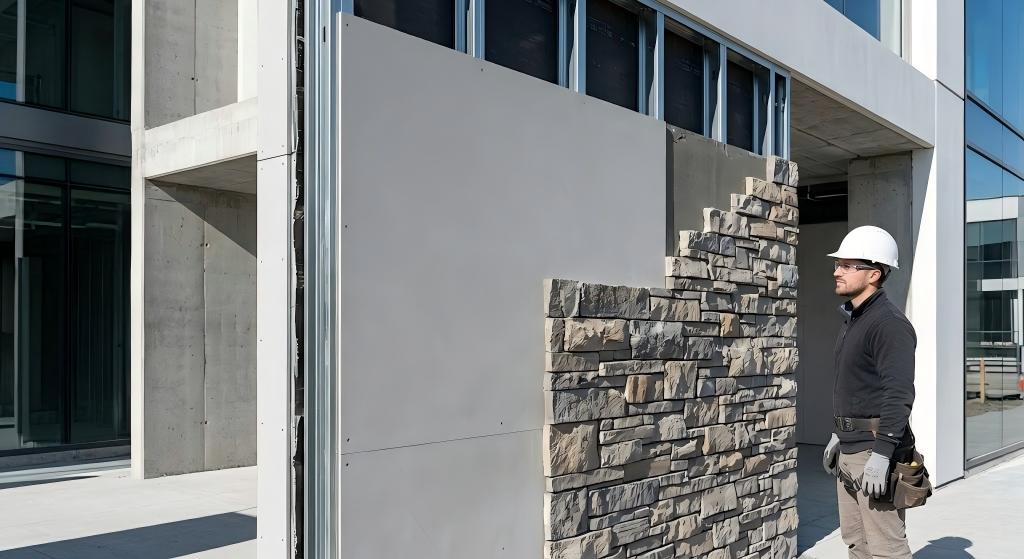
In high-performance commercial construction, architects design advanced ventilated rainscreen facades to maximize building energy efficiency and manage exterior moisture vapor. Furthermore, utilizing combustible or moisture-sensitive sheathing in these exterior applications explicitly violates modern international building codes. Consequently, developers rigorously specify heavy-density cement panels attached to galvanized steel framing as the primary structural sheathing. Therefore, this inorganic backing provides a rigid, L/360 deflection-resistant canvas that supports the exterior cladding while maintaining the continuous thermal insulation layer required to secure valuable LEED energy credits.
Healthcare Facilities and Cleanroom Environments
Hospitals and laboratory cleanrooms demand absolute biological sterility and pristine indoor air quality. Because standard paper-faced drywall actively feeds toxic black mold when exposed to humidity, it introduces severe biological risks to immunocompromised patients. Moreover, the chemical disinfectants used to wash hospital walls easily degrade organic substrates. Subsequently, medical architects exclusively utilize eco-friendly cement boards for surgical room partitions and subterranean clinical zones. Therefore, the board’s alkaline pH permanently starves fungal spores, while its zero-VOC composition guarantees that the facility easily passes strict environmental health and safety audits.
Eco-Friendly Multi-Family Residential Developments
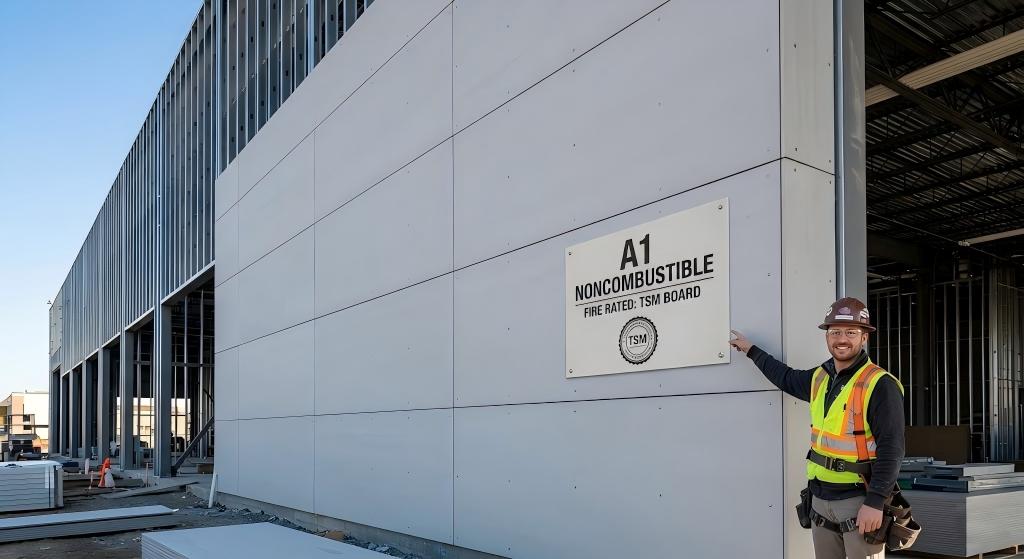
Sustainable developers constructing high-density apartment complexes face the dual challenge of meeting strict green building quotas while providing robust acoustic and fire compartmentalization between units. Additionally, standard wood framing and gypsum partitioning fail to provide adequate mass to block sound or fire safely. Consequently, utilizing these green architecture supplies allows developers to construct high-mass demising walls. Therefore, the cement boards successfully halt airborne noise transmission, block structural fire propagation (achieving Class A1 noncombustibility), and satisfy the environmental material sourcing requirements dictated by municipal sustainability boards.
Comparison Table: Evaluating Sustainable Substrates
When engineering an eco-conscious building envelope, architects must objectively evaluate the ecological impact and failure thresholds of various sheathing materials. The following table mathematically contrasts advanced cement boards against standard construction alternatives across critical sustainability metrics.
| Substrate Material | VOC Emissions & IAQ Impact | End-of-Life Recyclability | Mold & Biological Toxicity | Fire Resistance (Safety) |
| TSM Cement Board | Absolute Zero (No glues). | 100% Recyclable aggregate. | Absolute Immunity (No cellulose). | Class A1 (100% Noncombustible). |
| Traditional Drywall | Low, paper treatments vary. | Poor (Gypsum clogs landfills). | Fails instantly; feeds mold. | Limited (Paper facing burns). |
| Standard Plywood / OSB | High (Formaldehyde off-gassing). | Moderate (Often chemically treated). | Poor (Swells, delaminates, rots). | Highly Combustible (Class D/E). |
| MDF (Fiberboard) | Severe (Urea-formaldehyde). | Terrible (Chemicals leach to soil). | Terrible (Swells and dissolves). | Highly Combustible. |
As the chemical and biological data explicitly demonstrates, traditional organic building materials are fundamentally incompatible with modern sustainable architecture. For uncompromising indoor air quality, ecological responsibility, and structural longevity, utilizing an inorganic TSM Cement Board is the only scientifically sound engineering decision.
Installation Best Practices & Engineering Specs
Procuring an elite sustainable substrate is merely the first phase; executing a flawless installation dictates the ultimate energy efficiency and structural success of the assembly. Contractors must strictly adhere to architectural engineering protocols to eliminate thermal bridging and ensure a permanent monolithic barrier.
Framing and Thermal Bridging Mitigation
To maximize the energy efficiency of the building envelope, structural engineers mandate the use of light-gauge or heavy-gauge galvanized steel studs rather than wood framing, preventing future lumber rot. The steel studs must be spaced no more than 16 inches on center (O.C.) to provide rigid support. To prevent thermal bridging—where heat escapes through the highly conductive steel studs—contractors must properly insulate the wall cavity and frequently apply continuous exterior rigid mineral wool insulation before mounting the heavy-density cement board.
Precision Fastening for Structural Integrity
Installers must never use standard drywall screws to hang cement board in any structural application. Standard steel screws will rapidly oxidize when exposed to the alkaline cement and external moisture, causing them to shear off. Contractors must utilize highly specialized, alkali-resistant, ceramic-coated cement board screws. These fasteners must be driven perfectly flush with the board’s surface and spaced precisely every 6 to 8 inches along the perimeter and internal framing studs, ensuring the panel does not flex under dynamic wind loads.
Joint Treatment and Monolithic Continuity
To create a continuous, airtight substrate that prevents HVAC energy loss and moisture infiltration, the panel joints must be treated meticulously. Installers must leave a standardized 1/8-inch expansion gap between all boards. They then embed a 2-inch wide, alkali-resistant fiberglass mesh tape into a high-quality polymer-modified thin-set mortar directly over the seams. This inorganic joint treatment ensures that the entire documents assembly remains completely impermeable to air leaks, maximizing the building’s overall energy efficiency rating.
FAQ: 6 Technical Questions for Green Architects
1. What are the manufacturing dimensional tolerances of the cement board?
Premium eco-friendly cement boards are manufactured under strict ISO 14001 environmental and ISO 9001 quality control parameters. The thickness tolerance is rigorously maintained at +/- 0.5mm, and the edges are factory-cut with precise squareness. This ensures that the boards butt together perfectly on the steel framing, preventing thermal gaps and air leaks that compromise the building’s energy envelope.
2. How do installers cut the board without releasing hazardous silica dust?
Because the board utilizes a dense Portland cement and silica sand matrix, contractors must prioritize job site health. While ‘score and snap’ methods produce minimal dust, complex cuts require an angle grinder or circular saw equipped with a continuous-rim diamond blade. To comply with global occupational safety laws (like OSHA), operators must utilize tools equipped with active HEPA-filtered dust extraction vacuums and wear N95 particulate respirators.
3. Does the board contribute to LEED certification points?
Yes. Incorporating advanced cement boards can directly contribute to multiple points under the USGBC LEED rating system. Specifically, the boards contribute to the ‘Materials and Resources’ category due to their long life cycle and regional sourcing capabilities, and the ‘Indoor Environmental Quality’ category due to their zero-VOC emissions and absolute resistance to indoor mold proliferation.
4. Is the fiber cement board completely free of asbestos and toxic resins?
Absolutely. Legacy cement boards used decades ago posed severe health risks due to asbestos fibers. Modern engineering has entirely eradicated this practice. The board utilizes safe, continuous strands of alkali-resistant fiberglass mesh for tensile reinforcement. Furthermore, it contains no formaldehyde, benzene, or synthetic glues, guaranteeing a completely non-toxic architectural substrate.
5. Can this board be used in ground-contact exterior applications?
While the cement board itself is highly resistant to ground moisture and will not biologically rot, best sustainable building practices dictate that the bottom edge of the exterior wall sheathing should maintain a minimum 2-inch to 4-inch clearance above grade (soil or pavement). This prevents constant capillary wicking of bulk ground moisture up into the wall assembly and protects the building’s primary weep screed drainage systems.
6. Does the board possess thermal insulation properties (High R-Value)?
No. Cement board is a highly dense, thermally conductive mass. It possesses an extremely low R-Value and does not act as a thermal insulator. To achieve proper energy efficiency and meet green building codes, contractors must install closed-cell spray foam, rigid XPS foam board, or continuous mineral wool batts in conjunction with the cement board assembly.
Conclusion: Constructing a Permanent, Green Future
Ultimately, the ecological integrity and multi-generational lifespan of a modern sustainable building depend entirely upon the chemical safety and structural resilience of its hidden wall substrates. Attempting to reduce upfront construction costs by applying toxic, vulnerable organic sheathing in green architecture is a critical error that guarantees eventual catastrophic fungal decay and dangerous chemical off-gassing.
By mandating the use of premium eco-friendly fiber cement boards, structural engineers and green building architects establish an unyielding, fireproof, and biologically immune foundation capable of enduring decades of environmental stress without harming the planet. Do not compromise the environmental compliance or physical security of your next sustainable development. Secure your green building envelope with industry-leading, zero-VOC materials. Explore our comprehensive ecological specifications and detailed installation schematics by visiting the Contact Us page or downloading our technical documents directly at TSM Cement Board today to fortify your sustainable legacy.