Skip to content
Introduction: The Architectural Stakes of Masonry Failure

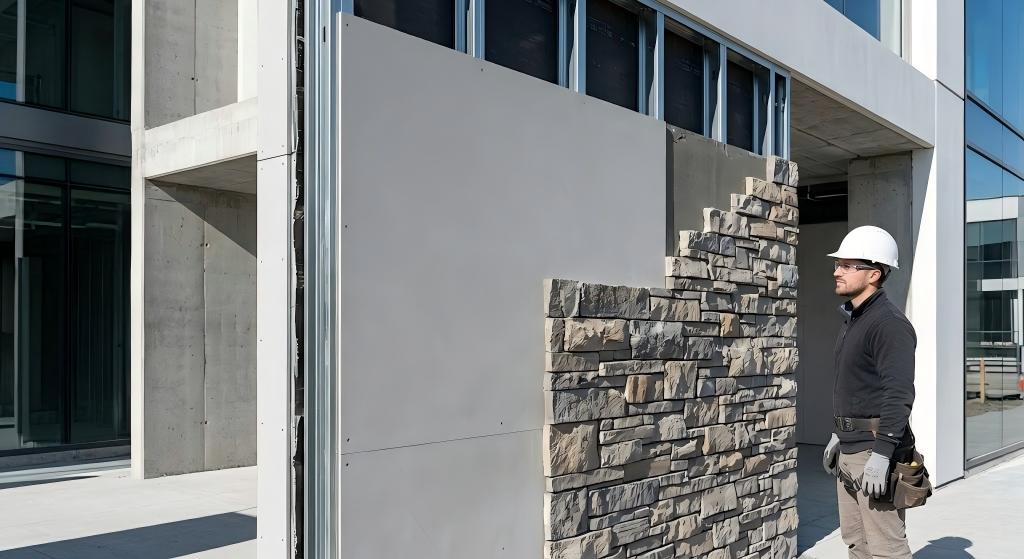
In the rigorous field of modern commercial and residential architecture, few structural failures are as catastrophic or financially devastating as exterior masonry collapse. When building envelopes suffer from severe water rot, hidden fungal decay, or sudden fire risks, heavy stone facades inevitably detach and plummet. Therefore, specifying an unyielding cement board substrate is an absolute engineering mandate for any successful masonry installation. Builders who attempt to cut corners by applying heavy manufactured stone veneer (MSV) or natural stone cladding directly over vulnerable organic substrates—such as standard plywood, Oriented Strand Board (OSB), or exterior gypsum—invite guaranteed disaster.
These traditional organic materials fundamentally lack the dimensional stability required to support massive static loads under dynamic environmental stress. When bulk water or ambient moisture vapor inevitably penetrates the mortar joints, wood-based substrates absorb the moisture, swell violently, and rot. This hygroscopic expansion instantly breaks the chemical mortar bond, causing sheer delamination of the stone. Furthermore, in the event of a structural fire, wood sheathing rapidly combusts, accelerating wall collapse.
Consequently, to completely mitigate these severe architectural pain points, engineers universally transition to high-density, inorganic cementitious panels. By leveraging an engineered exterior stone cladding backing, contractors permanently stabilize the building envelope against extreme weight, extreme weather, and extreme heat. In this comprehensive technical guide, we will analyze the precise physics of Portland cement, evaluate its superior load-bearing capacity, and outline the strict installation protocols required to support heavy stone veneer flawlessly.
Core Physics & Material Advantages

To fully comprehend why premium cement boards never yield under the immense gravitational pull of heavy masonry, we must deconstruct the specific molecular physics and inorganic chemistry of the substrate. Supporting stone cladding is an exercise in managing extreme shear stress and flexural modulus.
The Asbestos-Free Portland Cement Matrix
High-performance manufacturers formulate their load-bearing cement panels utilizing a highly compressed, crystalline matrix of Type I Portland cement, fine silica sand, and water. Crucially, modern engineering has completely eradicated the use of hazardous asbestos fibers. Instead, state-of-the-art facilities utilize continuous strands of alkali-resistant fiberglass mesh embedded deep within the faces of the cement core. This fiberglass reinforcement provides the massive tensile strength required to resist the bending forces applied by the heavy stone attached to its surface. Because the board consists entirely of inorganic minerals, it possesses an intrinsic, absolute immunity to biological decay. Termites cannot consume it, and toxic mold cannot germinate on it, ensuring a theoretically infinite lifespan within the wall cavity.
Managing Shear Stress and Load Capacity
When contractors install thick natural stone veneer, the wall assembly experiences profound shear stress—a downward gravitational force acting parallel to the face of the wall. Standard drywall or OSB features a very low modulus of elasticity; it tears or bows outward when subjected to sustained heavy point loads. Conversely, a premium cement board substrate features an exceptionally high shear modulus. The Portland cement matrix grips the polymer-modified thin-set mortar or scratch coat with tremendous mechanical adhesion. The board transfers the massive dead load of the stone seamlessly and evenly into the steel or timber framing studs, permanently preventing the cladding from shearing off the building facade.
Absolute Dimensional Stability Under Saturation
Stone veneer and its associated mortar joints are highly porous; they constantly absorb and release rainwater. A structural substrate must endure this continuous wet-dry cycling without changing its physical geometry. Standard wood sheathing swells logarithmically when saturated, bowing the wall outward and cracking the rigid mortar. An advanced cement panel maintains absolute dimensional stability. It exhibits a near-zero coefficient of hydro-expansion. Even when subjected to driving rain or severe freeze-thaw cycles, the board does not warp, shrink, or delaminate, guaranteeing that the fragile masonry joints remain perfectly intact.
Critical Applications & Real-World Use Cases
The immense shear capacity, absolute fire immunity, and rugged environmental resilience of extruded cement panels allow contractors to deploy them across the most punishing architectural environments. Engineers specify these heavy-duty boards wherever maximum structural insurance is mandatory.
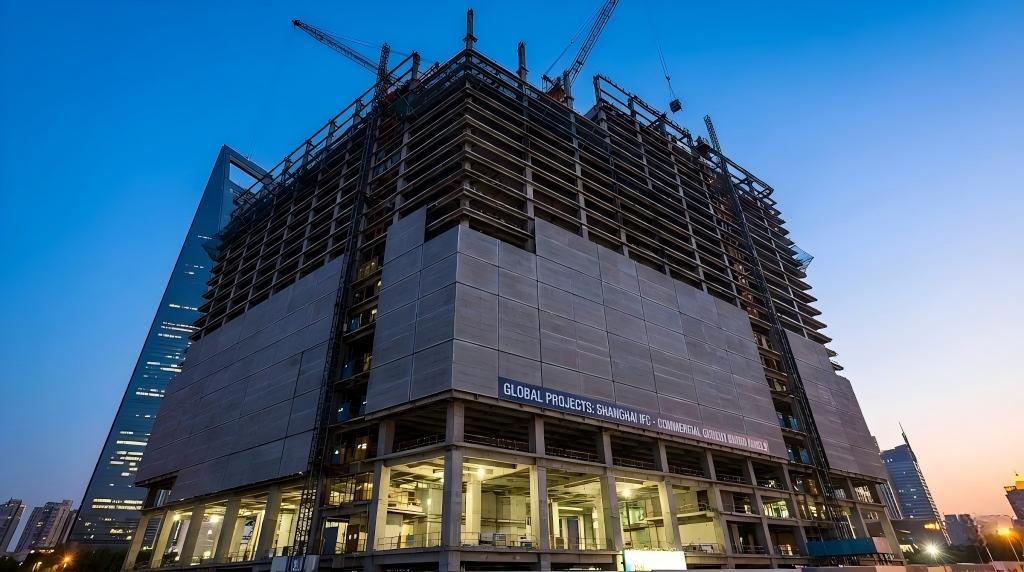
High-Rise Commercial Stone Facades
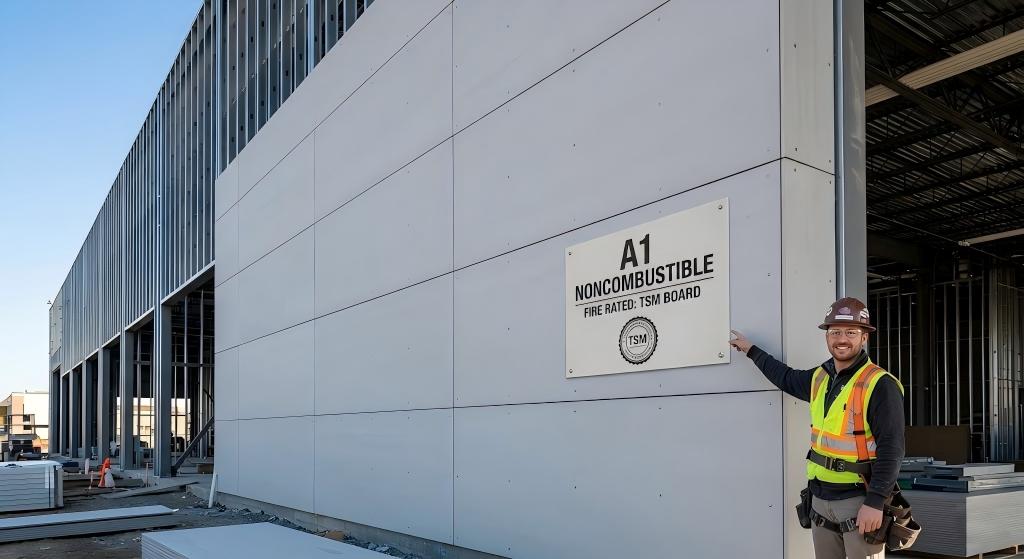
In commercial high-rise construction, wind load deflection and extreme vertical dead loads dictate material selection. Architects frequently design striking multi-story exterior facades utilizing thick natural limestone or heavy manufactured stone. Using combustible or flexible sheathing in these applications violates international building codes. Furthermore, wind vortices at high altitudes exert massive negative suction on the building envelope. Consequently, developers rigorously specify a dense masonry veneer base attached to heavy-gauge steel framing. This cementitious backing provides the rigid, L/360 deflection-resistant canvas necessary to support thousands of square feet of heavy stone while easily meeting the stringent A1 noncombustible fire codes required for commercial high-rises.
Massive Residential Fireplace Surrounds
Inside custom luxury homes, floor-to-ceiling interior stone fireplaces act as dramatic architectural centerpieces. However, the firebox generates intense, chronic radiant heat. If contractors apply heavy stone veneer over standard drywall surrounding the fireplace, the heat causes the gypsum to calcine and disintegrate, eventually leading to a catastrophic collapse of the stone into the living room. Therefore, high-end masons exclusively utilize a specialized heat-resistant cement board substrate directly over the framing. The board safely absorbs the thermal shock, providing a permanent, unyielding foundation for the heavy granite or stacked ledger stone.
Outdoor Kitchens and Masonry BBQ Islands
Outdoor living spaces endure brutal environmental punishment. Custom BBQ islands are typically constructed using light-gauge galvanized steel framing clad in heavy decorative stone. Because these structures sit outdoors, they are subjected to continuous rain, freezing snow, and the intense localized heat of the gas grill. Subsequently, wood sheathing will rot within a single season. Moreover, utilizing standard drywall poses a severe fire hazard. By skinning the steel frame with heavy-duty cement panels, contractors create an indestructible, fireproof, and weatherproof core that flawlessly supports the exterior masonry and heavy granite countertops.
Comparison Table: Evaluating Veneer Substrates
When engineering a wall assembly for heavy stone cladding, architects must objectively evaluate the failure thresholds of various sheathing materials. The following table mathematically contrasts advanced cement boards against standard construction alternatives across critical load-bearing and environmental metrics.
| Substrate Type | Shear Strength / Load Capacity | Moisture Resilience & Rot Resistance | Fire Resistance Classification |
| TSM Cement Board | Extremely High (Supports 15+ lbs/sq.ft) | 100% Waterproof, Zero Rot | Class A1 (100% Noncombustible) |
| Traditional Drywall | Very Low (Paper tears under heavy load). | Fails instantly; crumbles when wet. | Limited (Paper facing burns). |
| Standard OSB/Plywood | Moderate (Deflects under massive weight). | Poor (Swells, delaminates, and rots). | Highly Combustible (Class D/E). |
| MDF (Fiberboard) | Terrible (Zero structural shear strength). | Terrible (Swells irreversibly). | Highly Combustible. |
As the mechanical data explicitly demonstrates, traditional organic building materials are fundamentally incompatible with heavy masonry applications. For uncompromising structural safety, utilizing a high-density high strength wall board is the only scientifically sound engineering decision.
Installation Best Practices & Engineering Specs
Procuring an elite load-bearing substrate is merely the first phase; executing a flawless installation dictates the ultimate success of the masonry assembly. Masonry contractors must strictly adhere to structural engineering protocols to manage building deflection and ensure a permanent mechanical bond.
Structural Framing and Deflection Limits
Heavy stone veneer exerts massive static weight. Therefore, the underlying structural framing must be exceptionally rigid. Engineers mandate that light-gauge steel or pressure-treated timber studs must be spaced no more than 16 inches on center (O.C.). If the stud spacing exceeds this limit, the wall will bow between the studs, exceeding the critical L/360 deflection standard (the maximum allowable bending limit for rigid masonry). Before mounting the structural sheathing, contractors must verify the wall is perfectly plumb; any framing irregularities will transfer directly to the finished stone surface.
Water-Resistive Barriers (WRB) and Fastening
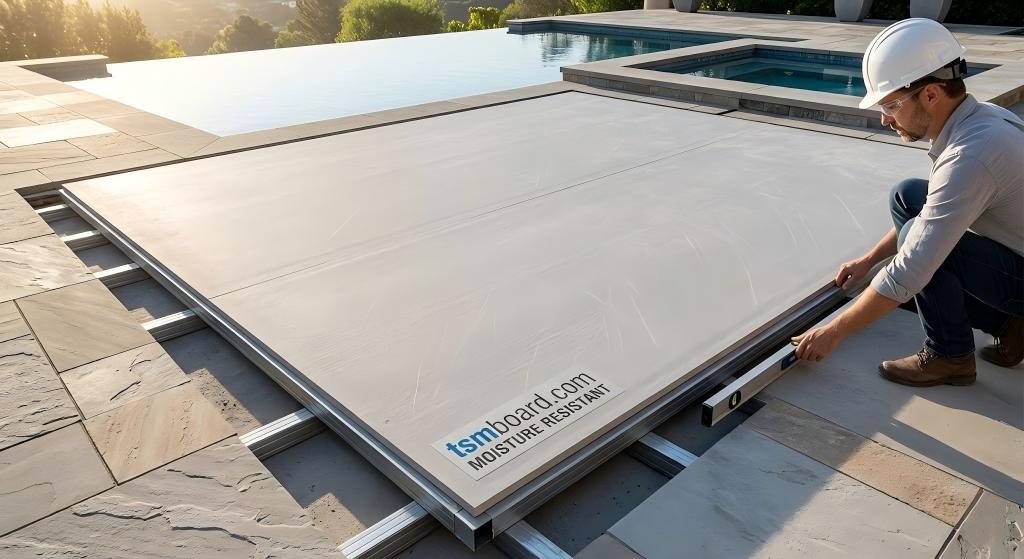
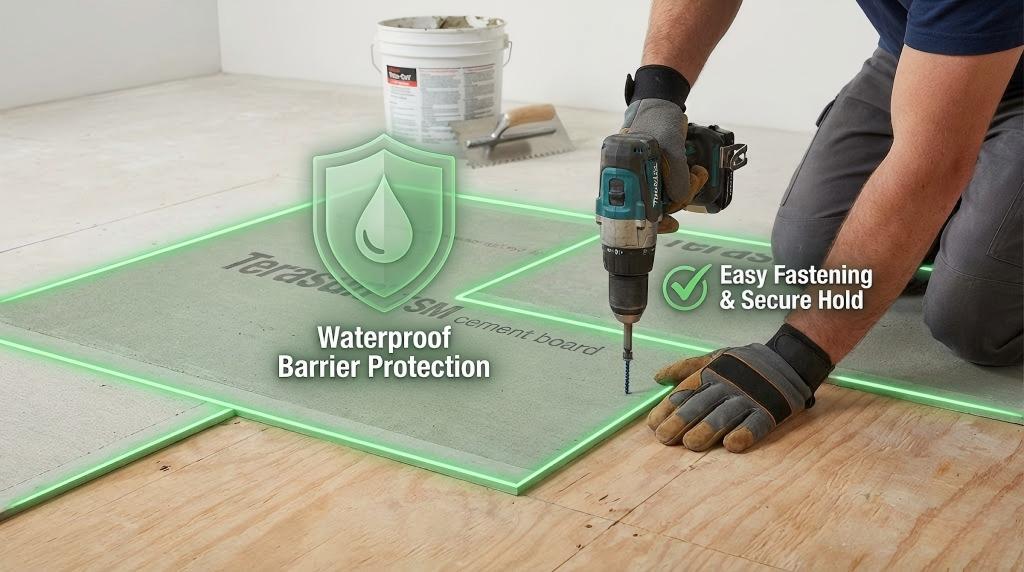
For exterior applications, building codes require managing bulk water behind the cladding. Installers must apply a breathable, code-approved Water-Resistive Barrier (WRB)—such as #15 asphalt felt or a commercial spun-bonded polyolefin house wrap—over the framing before installing the cement board. When fastening the boards, contractors must utilize highly specialized, alkali-resistant, ceramic-coated screws. Standard steel screws will rapidly oxidize and shear off. Fasteners must be driven flush with the board’s surface and spaced precisely every 6 to 8 inches along the perimeter and internal framing studs.
Joint Treatment, Lath, and Scratch Coat
To create a continuous, monolithic substrate, the panel joints must be treated meticulously. Installers must leave a 1/8-inch expansion gap between all boards. They then embed a 2-inch wide, alkali-resistant fiberglass mesh tape into a high-quality polymer-modified thin-set mortar over the seams. For heavy manufactured stone, contractors typically staple a galvanized expanded metal wire lath directly through the cement board and into the structural studs. Finally, they trowel a 1/2-inch Portland cement ‘scratch coat’ over the lath, allowing it to cure into a deeply grooved, highly adhesive base layer before mortaring the individual stones into place.
FAQ: 6 Technical Questions for Masonry Contractors
1. What is the maximum weight capacity (lbs/sq. ft.) of the cement board?
When properly fastened to 16-inch O.C. framing, a 1/2-inch premium cement board can easily support manufactured stone veneer and natural thin-cut stone assemblies weighing up to 15 pounds per square foot (psf). For heavier full-bed masonry, specialized structural engineering and dedicated masonry ledges tied directly to the foundation are strictly required.
2. Do I need to apply a scratch coat directly to the board, or can I use thin-set?
This depends on the stone type. For lightweight indoor ledger stone or thin brick flats, high-quality, heavily polymer-modified thin-set mortar can be applied directly to the clean, dust-free surface of the cement board. However, for heavy exterior manufactured stone veneer, building codes (such as the MVMA guidelines) typically require the installation of metal wire lath and a traditional Type N or Type S cement scratch coat over the board to guarantee maximum mechanical keying.
3. What are the exact dimensional tolerances of the board?
Our high-density cement boards are manufactured under strict ISO quality control parameters. The thickness tolerance is rigorously maintained at +/- 0.5mm, and the edges are factory-cut with precise squareness. This ensures that the boards butt together perfectly on the framing studs without creating uneven ridges that would complicate the lath and scratch coat application.
4. How do installers manage silica dust when cutting the board on-site?
Because the board utilizes a dense Portland cement and silica sand matrix, contractors must cut it using an angle grinder or circular saw equipped with a continuous-rim diamond blade. To comply with global occupational safety laws (like OSHA), operators must utilize tools equipped with continuous water suppression or HEPA-filtered dust extraction vacuums, and must consistently wear N95 particulate respirators.
5. Does the board comply with major international building codes?
Yes. High-quality cement boards are rigorously tested and certified to meet the world’s most demanding building codes. They comply with the European CE mark, strict ASTM standards for flexural strength and moisture resistance in North America, and carry the elite EN 13501-1 Class A1 noncombustible fire rating.
6. Can the board be used in ground-contact exterior applications?
While the cement board itself will not rot or degrade when exposed to soil or ground moisture, best building practices dictate that the bottom edge of the wall sheathing and the stone veneer should maintain a minimum 2-inch to 4-inch clearance above grade (paved surfaces or soil). This prevents constant capillary wicking of ground moisture up into the wall assembly and protects the weep screed drainage systems.
Conclusion: Build on an Unyielding Foundation
Ultimately, the aesthetic majesty and long-term safety of a heavy stone facade are entirely dependent upon the hidden structural substrate beneath it. Attempting to reduce upfront construction costs by applying expensive masonry over highly vulnerable, moisture-absorbing wood or gypsum sheathing is a critical architectural error that guarantees eventual catastrophic delamination.
By mandating the use of a premium cement board substrate, structural engineers and masonry contractors establish an unyielding, fireproof, and moisture-immune foundation capable of enduring decades of immense gravitational shear stress. Do not compromise the structural integrity of your high-end masonry designs. Secure your building envelope with industry-leading materials. Explore our comprehensive load-bearing specifications and detailed installation schematics by visiting the TSM Cement Board homepage, or reach out to our technical team via Contact Us today to fortify your next major project.